Showing posts with label West Africa. Show all posts

Tuesday, 29 December 2015

Congratulations to Guinea for defeating its Ebola virus disease epidemic!

CONGRATULATIONS!!!
After a very long and painful battle with many, many losses, Guinea has stopped the Ebola virus epidemic that began there in December 2013; two years ago.[1]


From Guinea, the Makona variant of a Zaire ebolavirus spread to and throughout Liberia and Sierra Leone. For Liberia, the wait for its third declaration of freedom from any new acute human cases, must continue until 14 January.[2] Two weeks and a bit. 

Sierra Leone has remained free any human cases since early November.[3]

My family and I were out having lunch when the clock ticked over and my 10-year old boy (10M) said "Dad, no-one at any of these other tables will know how good it is to hear this news". My family has talked a lot about Ebola virus and Ebola virus disease in the past year and a half. And we've all learned a lot by talking and sharing and generally communicating. We've also been frequently reminded of all that we have. But 10M was likely very right. 

From http://virologydownunder.blogspot.com.au/2014/07/ebola-virus-disease-evd-2014-west.html
For those of us that have been watching this tragedy unfold from the sidelines since the numbers started rolling out 23 March 2014, much more so for those citizens of Guinea and Liberia and Sierra Leone who have lived and died through this, for those who went to their aid, for those who facilitated that aid and for those in countries all around the world who received and treated cases - we are happy today in a way we have not been for nearly two years. Longer for some who were involved in caring for and trying to understand and diagnose the disease in the suspected index case, a small child from Meliandou village, Guéckédou in Guinea who became ill 26 December 2013. 

While cases and clusters may yet flare up in Guinea and elsewhere in West Africa there remain many thousands of survivors who are still suffering the consequences of infection and of viral persistence.

Good luck Guinea on your 90-day period of vigilance - and beyond. You have earned some dancing!

References...

Saturday, 23 May 2015

Guinea EVD cases rise - but not like they have before...

Edited for clarity 24MAY2015 AEST
The uptick in cases this week from, in particular, Guinea interrupted what was looking promisingly like a continuous downward trend in cases all the way to zero - yes, that was too much to hope for.

However, it's worth keeping some context around this:
  1. Everyone actually working in this space has forewarned us that getting to zero Ebola virus disease (EVD) cases was never going to be an easy journey.
  2. The indicators have consistently shown more reluctance in Guinea to "kick out Ebola" than in Liberia or Sierra Leone. What caused that reluctance, I don't fully understand from my totally uninvolved chair a million  miles away.
    I know right? Surprising.
    Yes-I'd like a specific reason, all wrapped up and presented to me. I'm simplistic and selfish that way. Get that for me will you?? 'Cause I'm totes sure you haven't been trying your collective butts off all this time.
  3. There were fewer new confirmed EVD cases this past week than in the tally for the week before or for other weeks - look back at January 2015, or October 2014 or June 2014, or any of a number of other dates when cases were accruing at a much faster rate than now (graph below).
    That is a silver lining. It's far from ideal, but it's not a return to the worst of it.
All along there has been something different about Guinea and that is now a clear sticking point in the final push to rid its people of Ebola virus|Makona. It never reported, as Sierra Leone did, days with averages of more than 100 cases. 

If we knew what was different about the people, communication, geography, weather, traditions, habits, thinking, ETUs, labs, government...or whatever..then we could perhaps better target the problem(s) and get to zero sooner. 

That will be core business for the next step to occur.

Click on graph to enlarge.

Monday, 23 February 2015

Transmission of Ebola viruses: What we know and jumping the black swan

Last week a review was released entitled Transmission of Ebola Viruses: What We Know and What We Do Not Know. The review, which is listed in the Opinion / Hypothesis section of mBio, was penned by by Michael T Osterholm and a large team of Ebola experts. You may know him from such articles as What We’re Afraid to Say About Ebola and What we should — and shouldn't — be worried about regarding Ebola or his entertaining seminar at the Johns Hopkins Bloomberg School of Public Health Ebola forum.

First up a few random points from me...
  • This is basically a good review of the historical literature on transmission of Ebola virus and some other ebolaviruses. By the way, this literature is based on real experience, observation and experimentation, defining our understanding of how Ebola virus has transmitted among humans.
    It's worth noting that there have been no concerns made public, nor any new transmission data from the epidemic in West Africa, which indicate changes in the way Ebola virus spreads from person to person
  • This review is an opinion/hypothesis piece so it has a lot of room to move. The language fairly clearly defines where the thinking strays into areas without any actual data to support them. Look for phrases with words like "possible", "could", "postulated", "may", "suggesting" and "can"
A quote from the new review by Osterholm
and experts. Highlighting is mine.
  • Does anyone actually care whether we use words like aerosol, airborne, droplet, droplet nuclei, wet droplets or propelled to mean "not by touch"? I'm not sure any more, but I think they should. Words have meaning and slightly different words carry subtley, yet importantly different meanings. It's important to keep in mind who the messages relating to public health should ultimately try and reach - that would be the public. Experts, comparatively few in number, already have an innate sense of the differences between the words above, right? Right?! Well, many do anyway. Trying to change language or redefine a target in the midst of an epidemic, is at best bad timing and at worst it seems self-serving (although to what end I cannot guess). 
Suggested ways in which an ebolavirus can spread from a known EVD case to a new person. The most likely route is suggested by the thickest arrows with solid outlines while the least likely or most improbable route is indicated by the thinnest arrow with a dashed outline.
Click on image to enlarge.

  • Ebolaviruses are not just blood-borne viruses in humans like HIV is for example; they are not just gastrointestinal viruses like norovirus (although droplets play a role here too); they are not considered by anyone to be airborne viruses like influenza virus
    What they are, in a transmission sense, is a hybrid of the first two - reaching high loads in the blood and the gastrointestinal system. To me, these shared features make it more clear why a different level of personal protective equipment (PPE) is needed than would be considered essential for caring with patients with just one or other type of virus
  • One distinct viral group may remain infectious for a longer period, shorter period, or not at all compared to another distinct viral group, in droplet nuclei - the air-dried (gel-like mix of proteins and salts..and infectious or non-infectious virus) form of droplets that have not yet hit an object or the ground.
  • The figure of just 1-10 viruses being required for an infection to take hold has generously been bandied about during the Zaire ebolavirus (the EBOV|Mak variant) epidemic of 2014/2015. But some overlook a simple component of this apparently easy infection process; 1-10 viruses landing on a cell is not the same as 1-10 intact infectious viruses being emitted from an infected host, travelling out of the host's infected cells in a drop of blood, semen, urine, sweat, saliva, diarrhoea or vomit, retaining infectivity while passing through various environmental conditions, onto a new host's mucosal surface, perhaps indirectly via a hard surface, getting past that body's innate immune defences and eventually attaching onto and gaining entry into that new host's cell, successfully replicating within it and then infecting neighbouring cells to establish a new infection. It may take thousands or hundreds of thousands of viruses in that initial drop of infection material to get those 1-10 infectious virus particles to start a productive, symptomatic human infection.
    We know little about this part of the story outside of the laboratory
  • On that theme, there is much in general we still do not know about the ebolaviruses and Ebola virus disease (EVD). Direct contact with virus-laden fluids or a needle-stick injury are still considered to be major routes for acquiring an ebolavirus infection but direct mucosal contact with propelled droplets may occur at distance further away than the old 3ft/1m rule.(6)
    Truly airborne dried or semi-dried droplets that contain sufficient infectious Ebola virus, can be inspired and can result in an upper or lower respiratory tract infection that progresses to become systemic EVD in humans....have yet to be found. They may contribute to infections, but it will be very hard to prove that this is a transmission pathway that exists as a thing separate from droplet transmission. The authors sort of note this difficulty too; both droplets and droplet nuclei result from coughs, sneezes and explosive vomiting and diarrhoea.
    The suggestion that droplets are produced from the respiratory tract and then inhaled by another person (6) resulting in EVD is really straining the use of "improbable"
  • I've written about some of this stuff before - on the distinct issue of Ebola virus and pigs here, on droplets and droplet nuclei here, the complexities of contact here, on seeking some better words here and on previous versions of this theme by some authors of this latest review here and here and I'm not going to rehash all of that here! I invite you to read those posts
Mixed messages..

A problems I have with this review is this line in the abstract..
We also hypothesize that Ebola viruses have the potential to be respiratory pathogens with primary respiratory spread.
While Osterholm and expert colleagues round off the review by clearly stating that airborne ebolavirus transmission is an "improbable scenario", and that droplet transmission is plausible (I don't disagree with the latter statement), parts of the rest of the review struggle to tow that line quite so clearly. The media seemed to have struggled to find that message too..

It is 'very likely' that the Ebola virus will spread through airborne particles, experts say
Daly Mail

Limited airborne transmission of Ebola is ‘very likely,’ new analysis says
Washington Post


..although one bright light in the gloom managed extremely well..

No, A New Scientific Report Does Not Say That Ebola Is Now Airborne
Vice News

Prof Vincent Racaniello noted in his blog post about the review that we understand what viruses do now, by what we have observed them to be capable of doing in the past

Do ebolaviruses actually have the potential to shift to a primary method of spread that occurs via droplets or droplet nuclei and spread like a rhinovirus, influenza virus or the measles..to name a few? If no virus which we humans have ever watched has changed its method of spread so dramatically before, why would this particular one do it now? Well, why wouldn't it, you may well ask? Because it takes more than some genomic mutations and drift to do this. At some point we need to remember that each virus comes with its own toolset and it doesn't usually have a lot of replacement parts or upgrades in a satchel over its capsid. It can only tweak its component parts so much and so far before it reaches the limit of what it "is". Could one virus become another virus? Maybe it could. I look forward to becoming Superman myself. What would it take to overcome whatever biological throttles have existed on the ebolaviruses prior to so much human spread, for a virus to stop spreading primarily by fluids resulting from certain host disease processes, to being spread mostly by inspiration of respirable droplets? Certainly something we've never seen before and something in need of a utility belt and  can of bat EBOla repellent. Again, we're not just talking about some "genotypic changes"; the ebolaviruses would need to accumulate a plethora of stable genetic changes to make that sort of transition, possibly in combination with changes in the disease processes within its host...us.

An opinion by any other title...

Despite the review being an opinion piece, it seems to have some trouble owning up to its own real opinion; that Ebola viruses can spread by a new route and cause new disease. The title really should have reflected the content better in this regard. In approximate number 5,800 words included 440 (8%) on animal transmission studies which are mostly about aerosol spread; 925 (16%) devoted to defining aerosols and droplets and trying to change the paradigm; 670 (12%) about what we need to learn, which includes some content on aerosol transmission; 670 (12%) on a respiratory transmission hypothesis. So a sizable chunk, nearly half of the content, is heavily focussed on educating us abut Ebola and aerosol transmission. The topic is additionally reinforced within every other section as well. So why hide what the article was really focussed on; not the general transmission of ebolaviruses, but transmission via an as yet unproven-route? The authors note that an "aerosol" contains all the different droplet sizes and degrees of droplet wetness and that this entire range is propelled out of us via cough, vomit, diarrhoea and by  aerosol generating mechanical procedures. We agree on that bit. But once the bigger wetter droplets fall away and one is not standing unprotected within their range, is there an infectious virus left in the drier smaller droplet nuclei which are held aloft by air currents until they impact with something or someone? 

Have we ever seen Ebola virus infections caught by people walking into a room after an infected case has left it...as is the case for measles or rhinovirus, truly airborne transmissible viruses? Or is droplet spread only occurring in close proximity to the source? This is another point the authors raise-that being close to someone who just vomited may result in breathing in larger droplets that are infectious but have not yet fallen to the ground. How will we ever know that this is not a propelled droplet instead? Explosively coughed or vomited material can travel a sizable distance as well? So we still await some evidence to support the musing that inhaled droplets carry infectious ebolavirus in them, and that they are distinct from the more likely impacting of propelled droplets. Propelled droplets are likely a key reason that updated PPE guidelines recommend against any exposed skin and the use of eye protection, gloves, boots and a respirator; the yellow suits that will forever be linked to EVD in West Africa. But even those suits don't support that Ebola virus has been, or is showing new signs of, spreading primarily via a respiratory route?

What I could not find in this new review was a more thorough discussion - and some hypothesis and opinion - of the risk associated with how healthcare workers acquired their infections when outside of Ebola treatment units or in western hospitals. Also absent was opinion on the practical risks of semen remaining infectious, or harbouring viral RNA as was found in 2014 in a returning asymptomatic convalescent man [3] (sexual transmission has not been documented [11]). I would very much have liked to read some hypotheses on the role infectious urine might play in urban settings lacking no sewers and with densely co-located populations, since urine has been shown to remain infectious for longer than blood, in a detailed case study from Germany in 2014.[3]

Wrap up...

So to summarize, coming into contact with virus-laden body fluids either by touch, perhaps via an intermediate surface (a fomite; unproven) or by having these fluids propelled onto you (as yet unproven), are considered the main risk factors that comprise the overwhelming majority of human-acquired ebolavirus infections. Current PPE guidelines are designed to combat these and if western hospitals are any guide, they work well - although it's a tough comparison given the different carer-to-patient ratios in western hospitals compared to outbreak conditions in west Africa. 

What role "respirable droplets" or droplet nuclei play in transmitting ebolaviruses between humans awaits evidence but nothing points to a role for an airborne route of infection in west Africa.[6] Hopefully some studies will be looking very hard at this question. Nothing hints at any changes in  EBOV/Mak that could result in it becoming a "respiratory pathogen with primary respiratory spread" capability.

I recommend reading a few other recent reviews and articles to get a more rounded view [7,8,10,12] and if you want to see droplet, aerosol and airborne get smooshed together into an undifferentiated mess, that's in print too.[9]

References...
  1. Transmission of Ebola Viruses: What We Know and What We Do Not Knowhttp://mbio.asm.org/content/6/2/e00137-15
  2. Experts suspect Ebola virus sometimes spreads by air
    http://www.cidrap.umn.edu/news-perspective/2015/02/experts-suspect-ebola-virus-sometimes-spreads-air
  3. A Case of Severe Ebola Virus Infection Complicated by Gram-Negative Septicemia.
    Kreuels B, Wichmann D, Emmerich P et al.  N Engl J Med. 2014 Dec 18;371(25):2394-401
    http://www.nejm.org/doi/full/10.1056/NEJMoa1411677
  4. Ethical issues in isolating people treated for Ebola
    http://www.ncbi.nlm.nih.gov/pubmed/25588871
  5. 2007 guideline for isolation precautions: preventing transmission of infectious agents in health care settingshttp://www.ajicjournal.org/article/S0196-6553(07)00740-7/pdf
  6. Ebola virus disease in Africa: epidemiology and nosocomial transmissionhttp://www.ncbi.nlm.nih.gov/pubmed/25655197
  7. Understanding Ebola Virus Transmission
    http://www.mdpi.com/1999-4915/7/2/511
  8. Chains of transmission and control of Ebola virus disease in Conakry, Guinea, in 2014: an observational study
    http://www.thelancet.com/journals/laninf/article/PIIS1473-3099(14)71075-8/abstract
  9. Ebola, through air or not through air: that is the question
    http://www.ncbi.nlm.nih.gov/pubmed/25646157
  10. Review of Human-to-Human Transmission of Ebola Virus from the US CDC
    http://www.cdc.gov/vhf/ebola/transmission/human-transmission.html
  11. Sexual transmission of the Ebola Virus : evidence and knowledge gaps
    http://www.who.int/reproductivehealth/topics/rtis/ebola-virus-semen/en/
  12. What we know about transmission of the Ebola virus among humans from the WHO
    http://www.who.int/mediacentre/news/ebola/06-october-2014/en/

Saturday, 31 January 2015

The filovirus tree has been shooting wildly

While there are not a lot of new branches, there are many, many new leaves on this growing tree. That is overwhelmingly due to the fantastic work of Dr Pardis Sabeti, and Stephen Gire at the Sabeti lab, Harvard University, and their many collaborators. 

It sounds like even more sequences will be coming out in the future. This group is the face of the molecular epidemiology of history's largest Ebola virus disease epidemic in Sierra Leone. If a team of scientists could be said to embody an aspect of an epidemic, it has been these guys and their virus characterization. Hugely impressive stuff.

I only wish we could see more Guinean and Liberian sequences - they are both hugely under-represented in this tree of complete genomes downloaded from GenBank a week or so ago.

Click on tree to enlarge even further.
Coloured boxes surround those sequences generated during the
2014 EVD epidemic. Orange boxes point out the nearest neighbours
and the year from which the sample that was sequenced, originated.
The West African Ebola virus Makona variant has been
traced back to sharing an ancestor in common with a 2007
variant in 2004.

References
  1. Genomic surveillance elucidates Ebola virus origin and transmission during the 2014 outbreak. Gire SK, Goba A, Andersen KG, Sealfon RS, Park DJ, Kanneh L, Jalloh S, Momoh M, Fullah M, Dudas G, Wohl S, Moses LM, Yozwiak NL, Winnicki S, Matranga CB, Malboeuf CM, Qu J, Gladden AD, Schaffner SF, Yang X, Jiang PP, Nekoui M, Colubri A, Coomber MR, Fonnie M, Moigboi A, Gbakie M, Kamara FK, Tucker V, Konuwa E, Saffa S, Sellu J, Jalloh AA, Kovoma A, Koninga J, Mustapha I, Kargbo K, Foday M, Yillah M, Kanneh F, Robert W, Massally JL, Chapman SB, Bochicchio J, Murphy C, Nusbaum C, Young S, Birren BW, Grant DS, Scheiffelin JS, Lander ES, Happi C, Gevao SM, Gnirke A, Rambaut A, Garry RF, Khan SH, Sabeti PC.
    Science. 2014 Sep 12;345(6202):1369-72. doi: 10.1126/science.1259657. Epub 2014 Aug 28.

Saturday, 6 September 2014

Case number changes between Ebola virus disease reports...

This is one of my favourite charts for following the Ebola virus disease outbreak in West Africa because it shows how things are changing from report to report. 

It plots the total number of suspected, probable and laboratory-confirmed cases between reports - which is a measure of change over time that is not cumulative.

That's not to say that understanding this chart is easy for everyone...as with everything, what you take away from it may be heavily influenced by your own perspective and your background in reading graphs. I have written something about how to read some of the graphs on my blog here, which may be helpful too.

Uses World Health Organization data up to and including the Situation Report from the 5th-Sept, 2014.
Click on chart to enlarge.
I've marked up the last three periods between reports to highlight that the time changes differently. You can see this for yourself if you look carefully at the horizontal or "x" axis (the one that has the dates) and look at where each dot lines up with its date. Some are further apart than others. 

You can also mouse over the dots on the interactive version of the graph here. That will tell you the dates. THe subtraction is up to you though!

The lines joining the dots here suggest what is happening between the WHO Reports, but the line do not actually use any real collected values...because we don't have them to plot. 

Technically, a bar graph would be more accurate, but I find a line graph easier to read at a glance. So do remember - we don't know what is happening between those dots. We're just presuming it.

Sunday, 31 August 2014

Ebola: Blood, sweat and tears...

This post follows up the recent one on convalescent semen being able to harbour infectious Ebola virus (EBOV; although I am not aware of any infection resulting from this route of transmission there has been at least one report for Marburg virus [4]).

I thought I'd give the same treatment to tears and sweat which are also fluids intermittently listed as possible sources of EBOV infection for humans. Some examples of the scientific literature which support the risk messaging, follow.

Blood...

I think we are all pretty clear that the blood of an advanced case of Ebola virus disease (EVD) is heavily laden with virus and is the most serious of the risk factors for acquiring infection by an ebolavirus.

Viral loads (amount of virus in the sample) in blood can be above 106-108 plaque forming units or copies (pfu; a measure of infectious virus present using a lab test that measure the impact of virus on infected cells; copies measure viral genome and cannot prove infectious virus is present) per millilitre of blood in acute phase disease patients and non-human primates.[5,6]

Sweat...

There is not a lot on sweat containing signs of an ebolavirus.
  • Bausch and colleagues found no trace of EBOV in a single acute sweat sample.[1]
  • Jaax and colleagues found that in experimentally infected non-human primates (NHPs; rhesus macaques), that connective tissues next to hair follicles and sweat glands in the skin as well as the cells lining ducts of glands in the skin were sometimes positive for EBOV antigens (proteins).[2]
  • Davis and colleagues infected NHPs (African green monkeys) and found signs of EBOV antigens in the cells lining the sweat gland ducts and in cells in the connective tissues next to hair follicles, but no virus particles by electron microscopy.[3]
  • Zaki and colleagues found heavy signs of EBOV antigens (proteins) in the tissues around the sweat glands, but rarely also within sweat glands and ducts.[8] No virus particles were seen in the sweat glands or ducts when examined by electron microscopy.
Tears...

There is also very little I have found on this one.

  • Bausch and colleagues found EBOV RNA in tears from 1 sample, but no infectious virus could be isolated.[1]
  • Jaax and colleagues found some signs of virus in macrophages in the ciliary body of the eye of experimentally infected NHPs
Spit...
  • Bausch and colleagues found infectious EBOV in 1 of 12 acute saliva samples (from 10 patients; none from 4 convalescent samples) and EBOV RNA in 8 of 12 (67%) of acute samples (none from convalescent samples).[1] RT-PCR positivity was significantly associated with fatal outcome.
  • Formenty and colleagues found EBOV antigens and EBOV RNA in oral fluids from fatal cases and those who survived infection.[7]
References...
  1. http://www.ncbi.nlm.nih.gov/pmc/articles/PMC2395567/pdf/bullwho00439-0113.pdf
  2. http://www.ncbi.nlm.nih.gov/pubmed/8712894
  3. http://www.ncbi.nlm.nih.gov/pubmed/9278608
  4. http://link.springer.com/article/10.1007/BF01734141
  5. http://www.sciencemag.org/content/suppl/2014/08/27/science.1259657.DC1/Gire.SM.pdf
  6. http://www.nature.com/nature/journal/vnfv/ncurrent/pdf/nature13777.pdf
  7. http://www.ncbi.nlm.nih.gov/pubmed/16652308
  8. http://www.ncbi.nlm.nih.gov/pubmed/9988163


Saturday, 30 August 2014

The fifth I give you...[UPDATED]

Senegal. 
According to it's Minister of Health, Awa Marie Coll Seck[1,2], a case of Ebola virus disease (EVD) has been imported from Guinea and it is confirmed by testing at the World Health Organization's collaboration Centre, the Pasteur Institute in Dakar.


Interesting that this occurred one week after Senegal closed its borders (again) with Guinea.[3,4] The infected 21-year old Guinean student travelled on 21-August to Dakar. On the 23rd he presented to a hospital but did not admit to being in contact with known EVD cases; Guinea issued an alert that a person with EVD contact has escaped surveillance 27-Aug; Senegal closed its borders around 22-August.[5,6,7,8].
[WHO Disease Outbreak News places his movements ahead of the closure of the border, arriving in Senegal 20-Aug [8]]

These borders are leaky and so the effect of "closure" essentially hinders aid, trade and economy (all very important to the region, especially right now) but very clearly does may not stop the spread of human hosts-as we have seen here


Humans are the variable in outbreaks. 


They behave differently each time. 


They respond differently each time. 


This is why no two outbreaks are identical. 


It's why you're a mug to assume this outbreak will be like the last outbreak.


While it looks like this is now a case study in why closing a border is ineffective, I maintain a position that border closures can't contain infectious disease. And please, do not point me to "temperature measurement" as a way to ensure capture of infected individuals. You could easily be harbouring an infection that does not yet express the symptom of fever. 

Click on image to enlarge. 
Graphic lifted from a great CNN video narrated by
Dr Sanjay Gupta. The video describes an example of
contact tracing and its importance to the fight
to contain EVD.[2] 

The contact tracing starts in Senegal now. A 42-day clock starts for the country and a signs and symptoms watch continues on all this case's contacts for 21-days.

References...
  1. http://in.reuters.com/article/2014/08/29/us-health-ebola-senegal-idINKBN0GT1CD20140829?feedType=RSS&feedName=health&utm_source=dlvr.it&utm_medium=twitter&dlvrit=309303
  2. http://edition.cnn.com/2014/08/29/health/ebola-outbreak-senegal/
  3. http://www.washingtonpost.com/news/world/wp/2014/08/29/the-ebola-virus-has-spread-to-senegal-as-the-deadliest-outbreak-in-history-gets-worse/
  4. http://www.washingtonpost.com/world/africa/alarm-grows-as-ebola-outbreak-spurs-more-flight-cancellations-border-closures/2014/08/25/87e6d020-2c66-11e4-994d-202962a9150c_story.html
  5. http://www.bbc.com/news/world-africa-28893835
  6. http://fox59.com/2014/08/22/senegal-closes-its-borders-with-guinea-over-ebola-fears/
  7. https://www.internationalsos.com/ebola/index.cfm?content_id=434&language_id=ENG


Monday, 25 August 2014

The battle of Ebola gains a second front...the Democratic Republic of Congo (DRC; formerly Zaire) [UPDATE #3]

So there are three reasons for this post. 
  • It may be a little while before we get solid confirmed information from the DRC and I think maps are useful for those of us who are ignorant of where countries live! [See below for update from WHO]
  • I'm looking for a quick post so I can move the previous post's grisly pictures down the page!
  • Mike Reid (see comments below; many thanks) brought to my attention that the range of the hammer-headed bat (Hypsignathus monstrosus; [5]) overlays the current ebolavirus outbreak areas strikingly well. I lifted that range graphic and (imperfectly, in pink) overlaid it onto my map - et voila!
Data for the hammer head bat's (Hypsignathus monstrosus) range come from The International Union for Conservation of Nature (IUCN) Red List of Threatened Species. I adapted the graphic for VDU from Wikipedia [3]
An 24-Aug report quoted the Minister for Health, Felix Kabange Numbi.[2] This latest outbreak occurs in a country that was the site of the first (known) outbreak of a virus of species Zaire ebolavirus (called Ebola virus [1] or EBOV), and which has had six other battles with Ebola virus disease (EVD).

One of the two viruses was reported to have been genotyped as a member of the species Sudan ebolavirus (SUDV) and the second was a "mixed" infection of SUDV and an EBOV.[2] A mixed natural infection of a human would be very...unheard of. Can't really say much more though, until we get this all clarified. 

A 26-Aug WHO-AFRO update noted that the index case, a woman from Ikanamongo village, died 11-Aug sometime after butchering a bush animal.[6] 24 suspected cases of haemorrhagic fever occurred between 28-Jul and 18-Aug. 

The latest updates define that the outbreak is solely due to viruses from the species Zaire ebolavirus.[7,8,9] The EBOV viral variants share 99% nucleotide identity with the Kikwit lineage of viruses from this same species (not "strain"). Put simply, this is the evidence needed to be able to state that the two concurrent EVD outbreaks (indicated in the map above as distinct events), are indeed due to genetically distinct viral variants of Zaire ebolavirus and are not related outbreaks. 

For more on naming ebolaviruses - check out my earlier post "Behind the naming of ebolaviruses".[10]

This latest outbreak was previously and relatively quickly (too quickly? Perhaps a message in there for all of us) described by the World Health Organization as being due to gastroenteritis with haemorrhaging...

...but subsequently, we learn today that...

The outbreaks share at least one common potential animal vector range. This is one of three bat species often pointed to as a possible natural host for ebolaviruses.

Since this is not the first time concurrent outbreaks of ebolaviruses have occurred, I was wondering about seasonal factors and whether they attract or affect bats. This new information adds another piece of the puzzle.

References
  1. http://virologydownunder.blogspot.com.au/2014/08/behind-naming-of-ebola-virusesnot-yet.html
  2. http://www.aljazeera.com/news/africa/2014/08/congo-ebola-outbreak-2014824183430461469.html
  3. http://en.wikipedia.org/wiki/File:Hammer-headed_Bat_area.png
  4. http://www.iucnredlist.org
  5. http://en.wikipedia.org/wiki/Hammer-headed_bat
  6. http://www.afro.who.int/en/clusters-a-programmes/dpc/epidemic-a-pandemic-alert-and-response/outbreak-news/4263-ebola-virus-disease-drc.html
  7. http://reliefweb.int/report/democratic-republic-congo/update-ebola-virus-disease-drc-no-5-30-august-2014
  8. http://www.who.int/mediacentre/news/ebola/2-september-2014/en/
  9. http://reliefweb.int/report/democratic-republic-congo/virological-analysis-no-link-between-ebola-outbreaks-west-africa
  10. http://virologydownunder.blogspot.com.au/2014/08/behind-naming-of-ebola-virusesnot-yet.html

Thursday, 21 August 2014

Ebola virus in semen is the real deal.... [UPDATED]

The World Health Organization (WHO) Ebola virus disease factsheet notes that ebolaviruses may be transmitted via the semen of a male who is getting over an ebolavirus infection, for a period of 7-weeks (~49-days).[1] 

The European fact sheet for health professionals and a Public Health Agency of Canada Pathogen Safety Data Sheet both note the 7-week figure, the latter also adds a 61-day figure.[2,3] 

The United States Army Medical Research Institute of Infectious Diseases (USAMRIID) Medical Managements of Biological Casualties Handbook (7th edition) notes a 3-month (~80-days) period, during which one should probably avoid sexual relations so as not to deliver virus directly to a mucosal surface.[4]

Semen is therefore listed as one of the body fluids from which Ebola virus disease may be contracted. 

While convalescent patients seem to be discharged before 7-weeks have elapsed, I presume the men are made very aware of this risk. This was specifically noted in one of the studies below. [8] 

But I find it hard to just accept things. 

As a scientist I'm used to looking for the little bracketed or superscripted numbers or perhaps "(Scientist et al)", at the end of sentences. Then I can check out the information source for myself. So here, I thought I'd try and add those and pt it altogether in one place here - and you can do your own checking out if you feel the need. 

Here are the research papers I've found for EBOV so far (there are also Marburg virus studies) - by all means send me any others I've missed and I'll add them.

  • Bausch and colleagues [5] were able to isolate, in cell culture in the laboratory, infectious Ebola virus (EBOV) from the semen of 1 of 2 samples from a single recovering patient who had EVD. 
    • The sample was collected 40-days after disease onset; at 45-days he was no longer positive for EBOV
    • No acute phase (active infections) samples were tested.
    • 1 of 2 samples were also positive for EBOV RNA by RT-PCR (detecting a portion of the virus's RNA genome)
  • Rodriguez and colleagues [6] could isolate infectious EBOV from seminal fluid 82 days after disease onset from a 27-year old male (also RT-PCR positive then). A sample at 51-days after onset was RT-PCR positive, but did not yield infectious virus.
    • EBOV RNA , but not virus, in 3 other convalescent cases (33, 29 and 25-years of age) at times ranging from 57 to 101-days after disease onset.
  • Rowe and colleagues [7], who examined the same patients, detected EBOV RNA by RT-PCR from 4 convalescent cases (27, 25, 29 and 33-years of age as above) at times ranging from 47 to 91-days after disease onset 
    • No infectious virus could be isolated and no viral antigens were found
  • Emond and colleagues [8] were able to isolate infectious EBOV from seminal fluid collected 39 and 61 days after disease onset
    • No EBOV was isolated 76, 92 or 110-days later
So if you are a man who has been diagnosed with an Ebola virus infection and survived, please, seriously, take extra care to practice safe sex. Use a condom. Or, even safer, just wait.

References...
  1. http://www.who.int/mediacentre/factsheets/fs103/en/
  2. http://ecdc.europa.eu/en/healthtopics/ebola_marburg_fevers/factsheet-for-health-professionals/Pages/factsheet_health_professionals.aspx
  3. http://www.phac-aspc.gc.ca/lab-bio/res/psds-ftss/ebola-eng.php
  4. http://www.usamriid.army.mil/education/bluebookpdf/USAMRIID%20BlueBook%207th%20Edition%20-%20Sep%202011.pdf
  5. http://jid.oxfordjournals.org/content/196/Supplement_2/S142.full
  6. http://jid.oxfordjournals.org/content/179/Supplement_1/S170.long
  7. http://www.ncbi.nlm.nih.gov/pubmed/9988162
  8. http://www.ncbi.nlm.nih.gov/pubmed/890413

Tuesday, 19 August 2014

Protect the healthcare giver>>save lives>>stop Ebola virus disease

Updated 061014
I live in Australia.

I have clean water on tap. Reliable electricity to burn. Internet access. A green garden. A lawn. A car. A very old cat who gets medical attention when he hiccups. A washing machine. A clothes drier. My kids have computer access. I have at least a dozen doctors within a 5min drive. 

I'm a virologist who has been through all levels of schooling available, then University, then went on to do a PhD. I'm privileged. I'm lucky. 

I want to help West Africa get its Ebola virus outbreak under control. I want to help support the healthcare givers and workers (HCWs) that are far braver than I am. I want hem to live to fight another day in the mud, heat, fear and pressure. And to leave when the job is done and return to their lives as the heroes they are.

I don't know much of what is being done to help though. 

I don't know whether my own government is providing supplies in my name. I'd like them to be doing more than paying for others to fight this epidemic. I'd like philanthropists and industry and people who take my money to stop, and give some of it to help out. I'd particularly like those funds to be used right now to purchase, deliver, distribute and secure a steady stream of personal protective equipment (PPE) to all those well-trained HCW individuals and organizations battling to contain an acute, untreatable, easily spread, often fatal viral disease in countries with some of the poorest healthcare...In. The. World. I want them to have gloves, gowns, masks and goggles. I don't want them to have to re-use PPE and be infected in the process. I don't want them to be in fear of stopping a terrified potential patient from running away because they don't have the PPE to feel safe in just holding that person's arm and saying, "stay, we are here to help, if you leave we can't do that and you are more likely to die".

I don't feel guilty that I want this done for this disease now and not that disease all the other times.

But what can I do?

I donate some of my money. I do this every year anyway but I'm donating some more now because there are some worthwhile organizations that I trust to help West Africa, now. I don't send myself into debt. But I give a chunk now. I gave a chunk last week. I'll give another chunk soon. Some of this will be in my name, some in my wife's and some in my kid's name. Some might be a present for someone else. If we all did that, we could help. But we shouldn't just give it to organizations or individuals who have no plan or skills to use it. Or to those who will spend it on salaries and overheads.

So I give my donations to these organizations now:
  • Médecins Sans Frontières (MSF)
    They are meticulous, fastidious and well trained so they don't needlessly risk themselves. They are on the front lines everywhere. They have been all over this outbreak from early one. They warned us.
    http://www.msf.org/
  • Direct Relief
    They can (and have) mobilize the PPE I want delivered. They have contacts with others in industry. They are a nexus for getting this done.
    http://www.directrelief.org/
  • International Federation of Red Cross and Red Crescent Societies.They are one the ground helping keep locals informed about Ebola virus
    http://www.ifrc.org/
  • United Nations International Children's Emergency Fund (UNICEF)
    Always finding way to help children. There is a growing orphaned population in West Africa.
    http://www.supportunicef.org
  • United Nations Foundation Ebola Response Fund
    The UN created this fund as way to allow individuals, corporations and civil society organizations to directly support UN entities in their efforts to respond to the Ebola virus disease outbreak.
    https://secure.globalproblems-globalsolutions.org/site/Donation2?8780.donation=form1&df_id=8780
Some organizations I have not donated to yet, but like the look of...

Some other recipients for your chunks could be in these lists...
I am also making others aware of these organizations so they can add their chunks in - if and as they see fit. You can do that too. 

If you have a favourite company, try contacting them. If you have a favourite movie, hit up the actors, producers, directors. Try anything. Spend an hour tomorrow looking up some people and sending them an email or a Tweet to ask them to help provide the fuel needed by the people who know how to get this done.

Be part of helping out. 

Monday, 28 July 2014

Ebola West Africa numbers in context...[AMENDED]

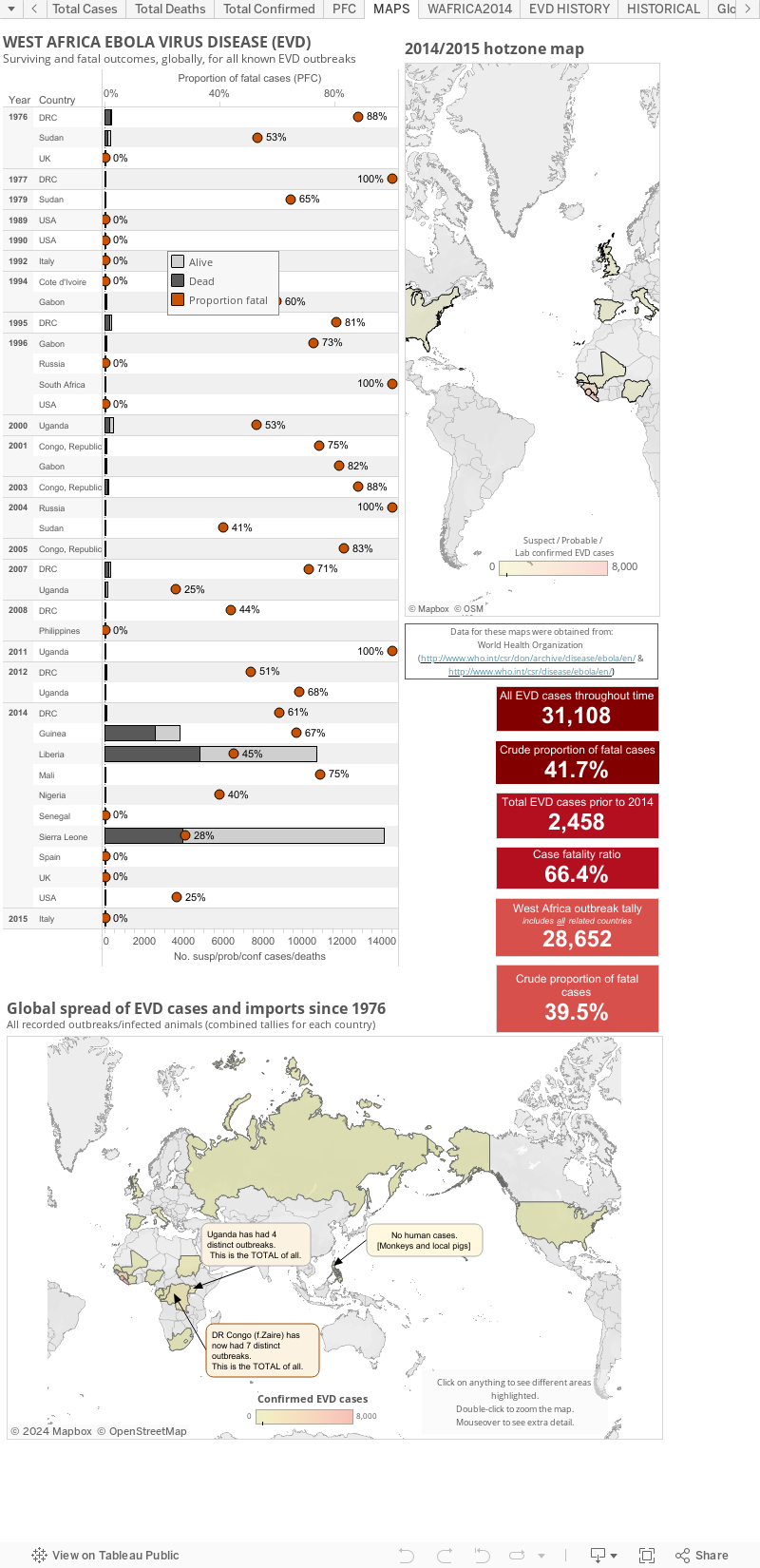
A quick glance at how the suspect, probable and laboratory confirmed (susp/prob/conf) cases of Ebola virus disease (EVD) stack up in the 3 countries with local spread of Zaire ebolavirus.

Please note that I have separated Guinea-2014, Sierra Leone-2014 and Liberia 2014 only to highlight that each country in the single "West Africa" outbreak (involving a single viral variant as far as we know) has greater case numbers than those found in many of the earlier outbreaks.

I have not yet listed the case imported to Nigeria here.

Click on chart to enlarge.

Friday, 4 July 2014

Ebola virus disease (EVD) 2014 West African outbreak..

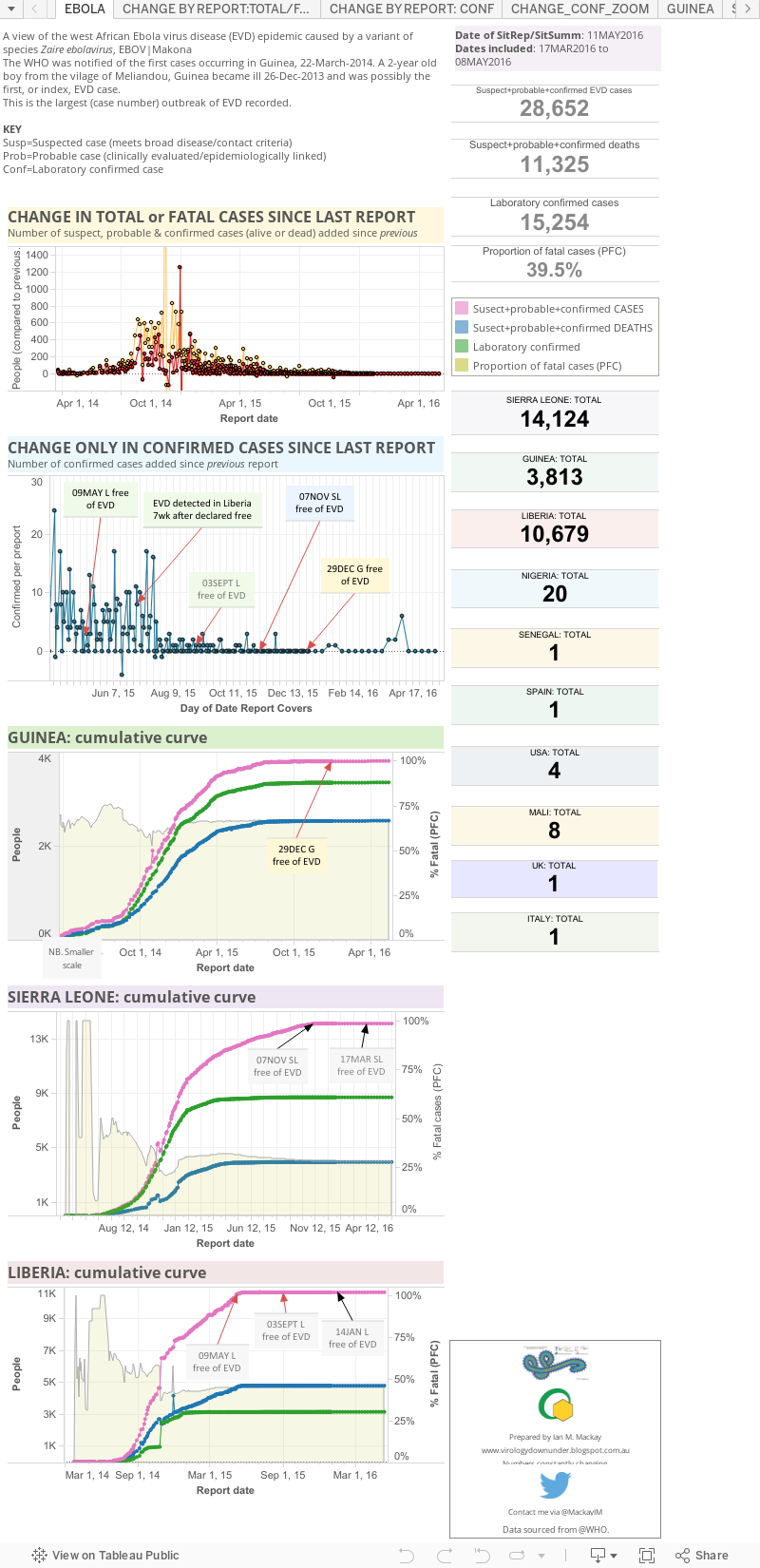
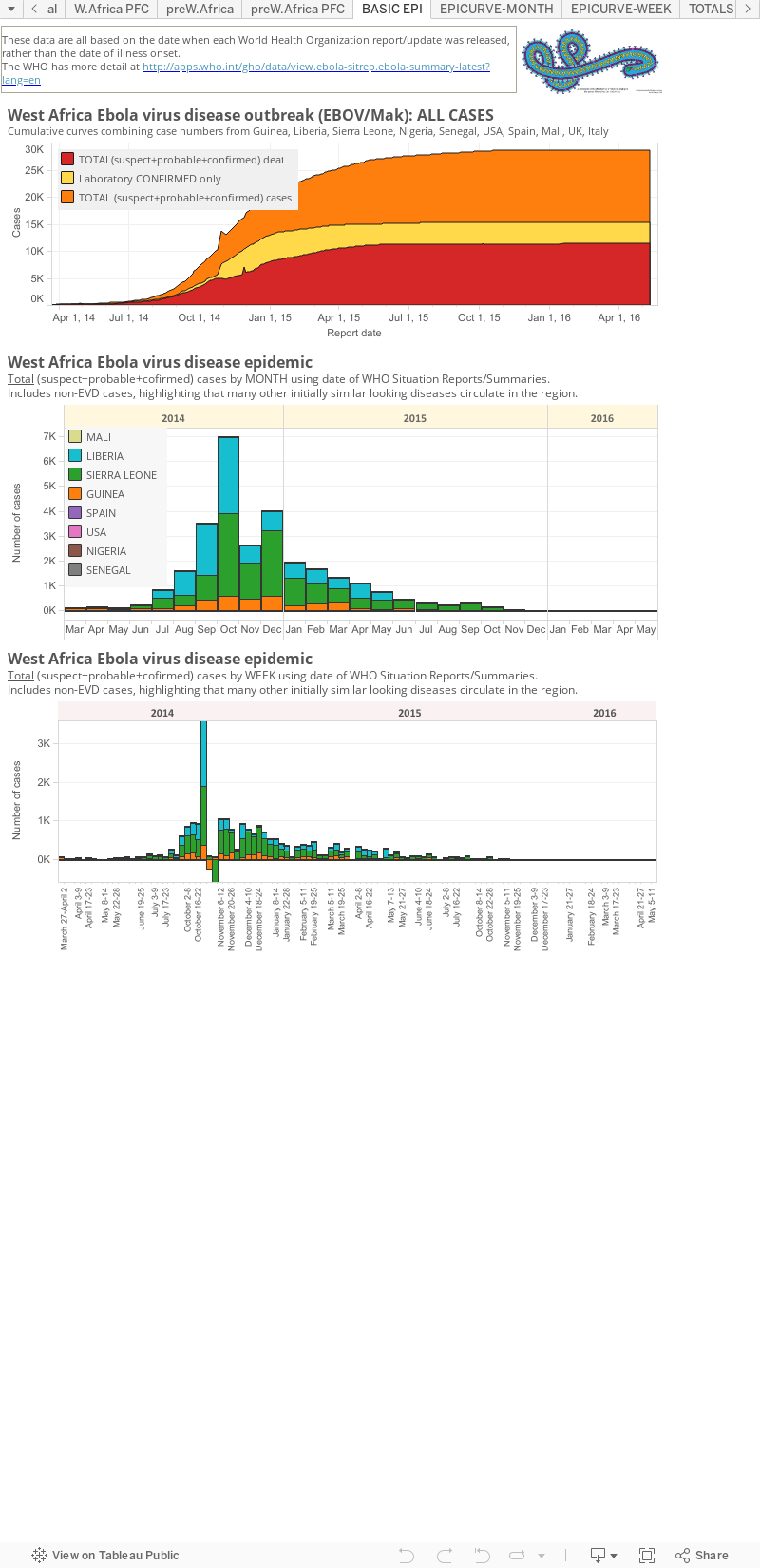
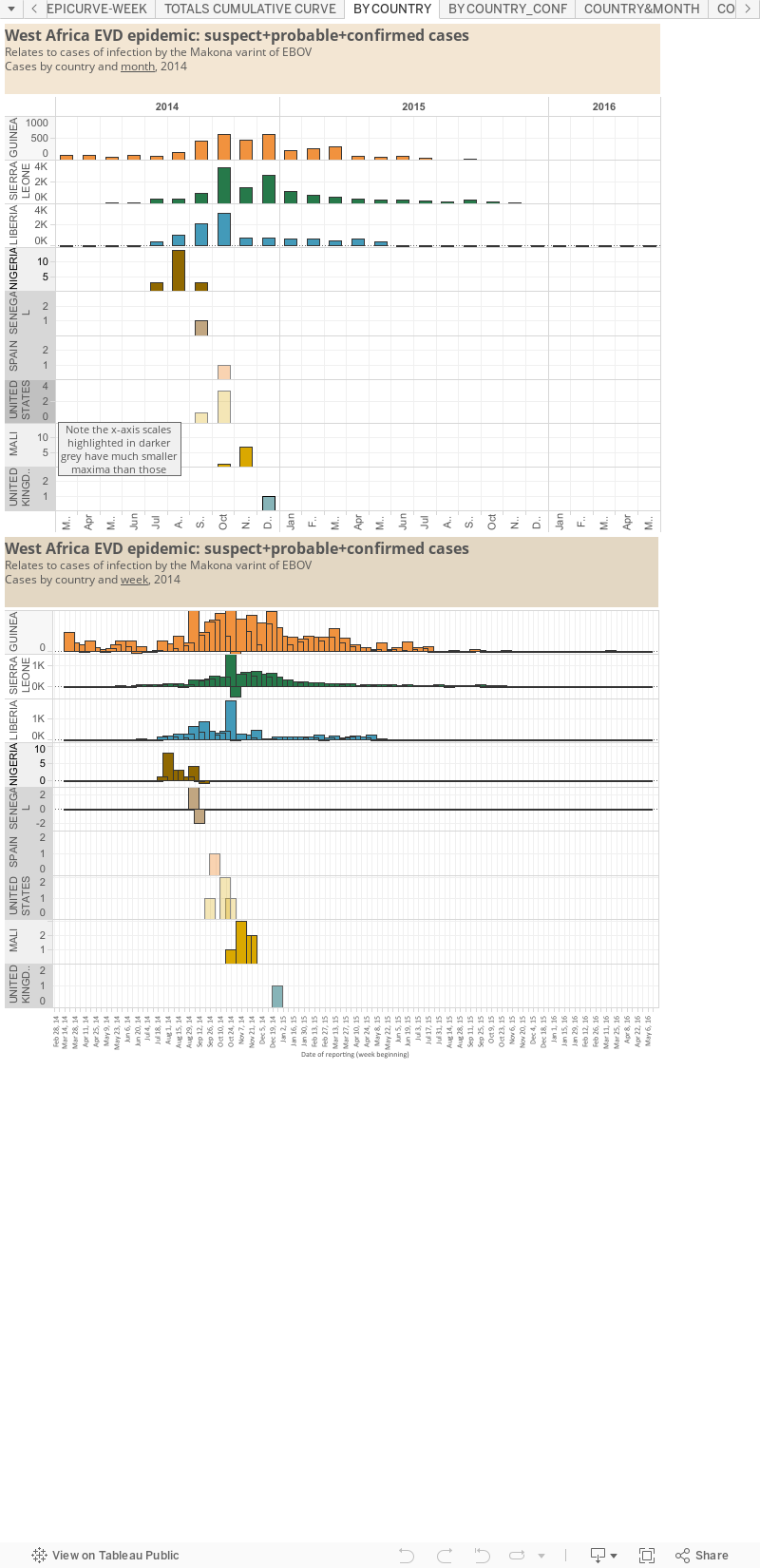
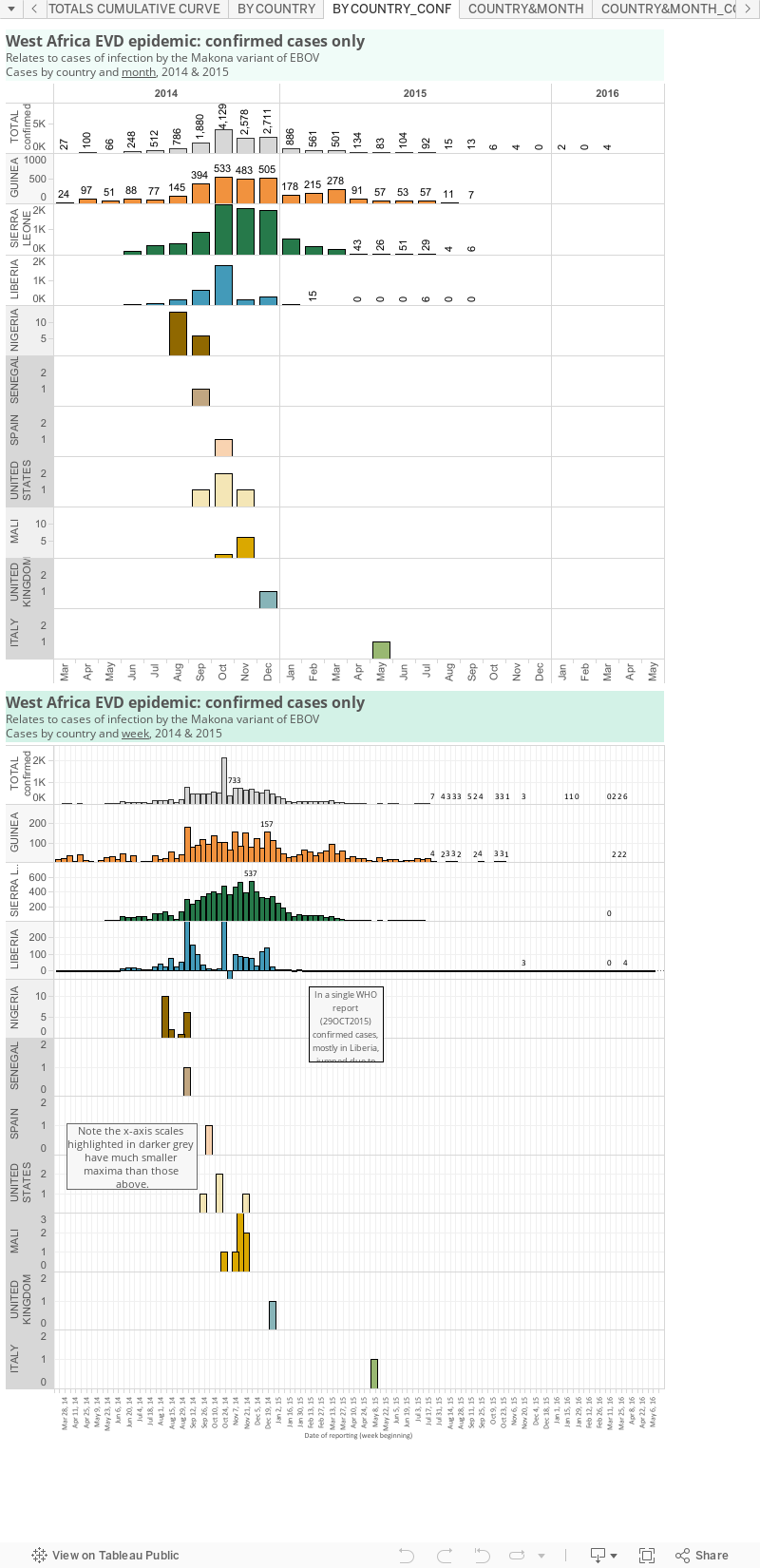
I will update this static page (link won't change so you can bookmark it) with the 2014 West African Ebola virus disease (EVD) numbers after they are released by the World Health Organization (WHO). The date these graphs were last updated is listed at the top of the first panel or "dashboard" of graphs an totals .

The WHO create multi-page Situation Reports [2] and brief Situation Summaries.[3] The SitRep's are currently presented on Wednesday and "additional updated figures" will be posted" a SitSumm when they become available any day of the week" (via eMail to journalists from WHO).


My totals include all
 countries that have hosted a case in, or sourced from, a West African nation. Countries include Guinea, Liberia, Sierra Leone, Nigeria (now EVD-free), Senegal (now EVD-free), the United States of America, Spain (now EVD-free), Mali (now EVD-free) and the United Kingdom. 'EVD-free means there are no known cases of EVD in the country. Some countries bring in cases of EVD to treat them; they can be defined as free of Ebola virus transmission, but not technically free of the EVD.


The West African region epidemic (top map below), including countries with imported cases and the totals from past Ebola virus disease outbreaks and the few imported monkey cases (the US & Philippines [hence zero human cases]) plotted by total numbers and country (bottom map).


A note about the proportion of fatal cases (PFC): On these graphs, my PFC calculations for West African countries and the DRC are based on dividing the total number of suspected+probable+confirmed deaths by the number of total suspected+probable+confirmed cases on the same date. This is crude and is an underestimate of the true case fatality ratio (CFR) which has stood at ~70% throughout the epidemic.[2]

Reminders: 

  • The graphs above, as with all made by me VDU, are made for general interest only. It is also freely available for anyone's use, just cite the blog (http://virologydownunder.blogspot.com.au/) and me (Dr. Ian M Mackay, PhD) please. It may be that I have misinterpreted the language in the reports (sometimes a little tricky to wade through) or miscalculated some totals based on the way data have been presented. 
  • Sometimes there are very country-specific differences in what gets presented to/via the World WHO DONs/SitReps which make this process less clear than it could be. I recommend you have a read and compare the data from each of the countries for yourself to understand these issues.
  • As I've talked about previously,[1] these numbers are all volatile for a variety of reasons, some Ebola-specific, so regard this chart for its trends only.
  • I am only able to plot what is publicly available. To date, this does not include granular data with dates of onset, or daily data of any kind. The WHO have these data and you will see them become more available through their Situation Reports found here http://www.who.int/csr/disease/ebola/situation-reports/en/ 
  1. References... 
    1. Ebola virus disease and lab testing...
      http://virologydownunder.blogspot.com.au/2014/04/ebola-virus-disease-and-lab-testing.html
    2. Ebola virus disease outbreak Situation Reports (SitRep)
      http://apps.who.int/ebola/en/current-situation
    3. Ebola virus disease outbreak Situation Summaries (SitSumm)
      http://apps.who.int/gho/data/view.ebola-sitrep.ebola-summary-latest?lang=en