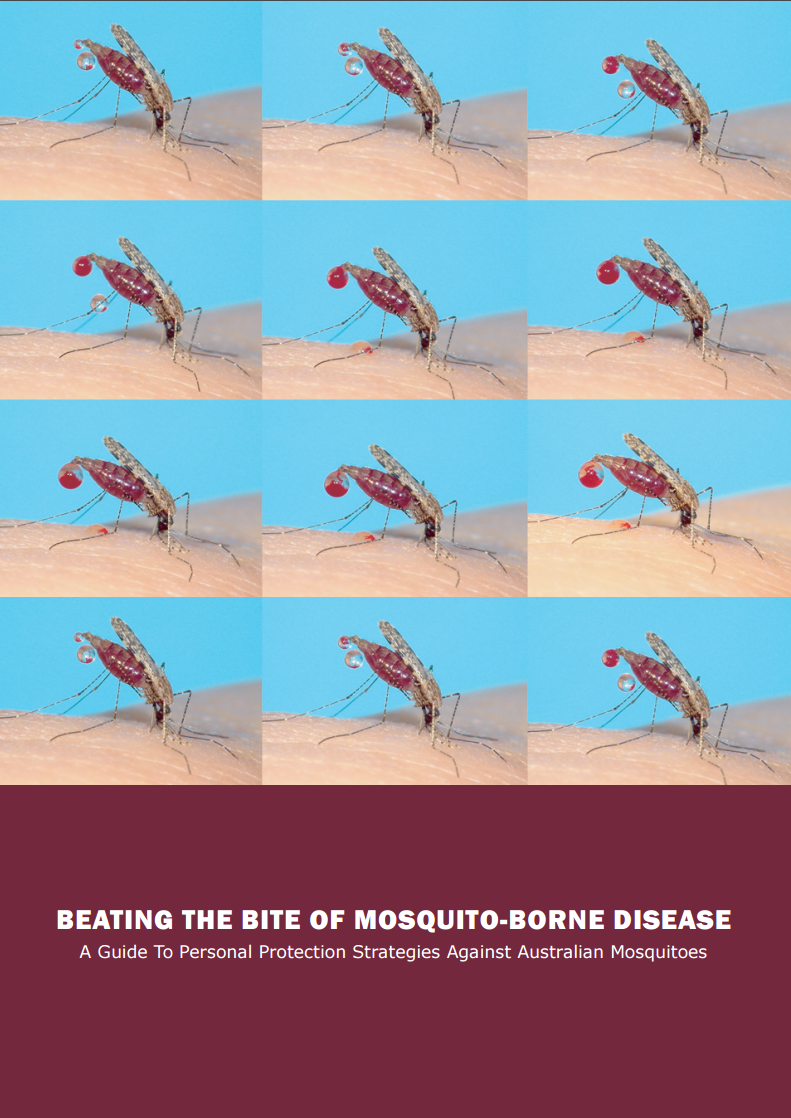
Want to tell someone what to use to avoid mosquito bites, repel mozzies and treat bites? Refer them to this little gem from Dr Cameron Webb (@Mozziebites on Twitter).
You can see it on the website here and download the PDF here.
References...
The Virology Down Under blog. Facts, data, info, expert opinion and a reasonable voice on viruses: what they are, how they tick and the illnesses they may cause.
Showing posts with label dengue virus. Show all posts
Tuesday, 19 April 2016
Friday, 8 April 2016
The three parent hypothesis: Mum, Dad and Zika virus...
Ian M. Mackay & Katherine E. Arden
But there was something fascinating to see when the authors pointed us to the viral loads in samples collected 2 weeks after symptom onset...
- Serum: 102.8 copies of viral RNA per millilitre of sample (about 631 copies/ml)
- Urine: 103.1 copies/ml (=1259 copies/ml)
- Semen: 108.6 copies/ml (=398,107,171 copies/ml)
Not only was there so much more viral RNA in semen than in urine or serum, but serum remained positive 2 weeks later. That is not the norm for a ZIKV infection. Usually, viraemia (virus, or viral RNA as a surrogate for virus, in the blood) resolves within a week.[2] That suggests that in some people, ZIKV can replicate very efficiently and for a longer time than what we consider to be the average. Could this be something to do with the nature of the particular ZIKV variant of the Asian lineage circulating in Brazil? Is it just showing up because there are more cases than we've seen before. It does - yet again - flag how much we need more testing data and publications of quality from Brazil. We also really need some comparative virology studies, and more sequencing. Key puzzle pieces that are still missing.
Sexual transmission of ZIKV is rare but, as we've seen described a number of times now,[3] it is a plausible route of infection. It may also be possible that an infectious dose - currently not defined - is delivered via the semen of even low viral load mildly ill or asymptomatic men; assuming that lower viral loads correlate with few or no symptoms and assuming that there is any ZIKV in the semen of men with mild signs and symptoms, or none at all. This may lead to an infection in the partner.
What if... a ZIKV infection in the female partner leads to a foetus with congenital anomalies that begins at fertilization? What if there are in fact 3 players at conception; Mum, Dad and Zika present in the semen?
Among those studies which hopefully aim to go beyond the "scientific consensus" and use actual science to logically seek some real evidence, it would be great to see them answer:
- What is the serostatus of the mother and father for DENV, CHIKV and ZIKV before conception?
- Is Dad's semen positive for DENV, CHIKV or ZIKV prior to conception?
- How do antibody levels to DENV, CHIKV and ZIKV vary during the course of the pregnancy?
It is worth considering the other two viruses, DENV and CHIKV because there has been no investigation into whether they, or cellular or antibody immune responses to them, may interact to produce the foetal anomalies seen in Brazil and French Polynesia. These three viruses have all been active at some time in these regions-sometimes at the same time.
Some things to at least consider.
References...
- http://www.thelancet.com/pdfs/journals/laninf/PIIS1473-3099(16)00138-9.pdf
- http://virologydownunder.blogspot.com.au/2016/04/usefulness-of-urine-samples-for-zika.html
- Sexual transmission of Zika virus: implications for clinical care and public health policy
http://www.ncbi.nlm.nih.gov/pubmed/27048746
Tuesday, 22 October 2013
DENV-5: virus from the jungle comes to humans?
Earlier today I posted on a conference announcement by Dr Nikos Vasilakis of a 5th human dengue virus (DENV) discovery, "the first new dengue virus type in 50 years"
Weeeell. There is more to understanding that headline than I initially thought.
Turns out, and please excuse the complete ignorance of dengue literature in my earlier post, dengue coming to humans from the jungle (mosquito to non-human primate, occasionally spilling over to humans; the so-called sylvatic cycle) is not an entirely new thing. Jungle? What am I on about? DENV-5 is a new sylvatic serotype, and it must be a pretty genetically and antigenically distinct one at that, in order to get a new number.
Dr Vasilakis has written about sylvatic spillovers previously and in great detail - see this article in Nature Reviews|Microbiology from 2011. One comment was particularity interesting...
Whether this holds true for DENV-5 remains to be defined but we know this new serotype (it elicted a very distinct antibody response in infected monkeys from that due to DENV1-4) was isolated from a human in Malaysia during 2007.
Sylvatic dengue viruses have infected humans before but there have been no sustained epidemics and they seem to have been related to 1 of the 4 serotypes currently endemic in humans.
One example, published in PLoS Neglected Tropical Diseases, sequenced the complete genome of a distinct sylvatic DENV-2 serotype isolate that caused dengue haemorrhagic fever (DHF) in a male in Malaysia in 2008. This was the first report of a sylvatic DENV causing DHF in a human. This ancestor of the human lineage DENV-2 was genetically related to a 1970 isolate (P8-1407) also obtained from Malaysia (where Gulden is endemic), after it infected a "sentinel" monkey. Such animals are kept in an area and sampled to see if they have become infected - a way of measuring mosquito and haemorrhagic virus activity in this case.
Another example includes a sylvatic DENV-1 from 2005 isolated in Malaysia and similar to a 1972 sylvatic DENV-1 isolate (P72_1244).
I hope that adds some value to my earlier post.
Also see Crawford Killian's post on this topic from 2011.
Weeeell. There is more to understanding that headline than I initially thought.
Turns out, and please excuse the complete ignorance of dengue literature in my earlier post, dengue coming to humans from the jungle (mosquito to non-human primate, occasionally spilling over to humans; the so-called sylvatic cycle) is not an entirely new thing. Jungle? What am I on about? DENV-5 is a new sylvatic serotype, and it must be a pretty genetically and antigenically distinct one at that, in order to get a new number.
Dr Vasilakis has written about sylvatic spillovers previously and in great detail - see this article in Nature Reviews|Microbiology from 2011. One comment was particularity interesting...
...recent experimental evidence indicates that little or no adaptive barrier exists to the emergence of sylvatic DENV in the human population
Whether this holds true for DENV-5 remains to be defined but we know this new serotype (it elicted a very distinct antibody response in infected monkeys from that due to DENV1-4) was isolated from a human in Malaysia during 2007.
Sylvatic dengue viruses have infected humans before but there have been no sustained epidemics and they seem to have been related to 1 of the 4 serotypes currently endemic in humans.
One example, published in PLoS Neglected Tropical Diseases, sequenced the complete genome of a distinct sylvatic DENV-2 serotype isolate that caused dengue haemorrhagic fever (DHF) in a male in Malaysia in 2008. This was the first report of a sylvatic DENV causing DHF in a human. This ancestor of the human lineage DENV-2 was genetically related to a 1970 isolate (P8-1407) also obtained from Malaysia (where Gulden is endemic), after it infected a "sentinel" monkey. Such animals are kept in an area and sampled to see if they have become infected - a way of measuring mosquito and haemorrhagic virus activity in this case.
Another example includes a sylvatic DENV-1 from 2005 isolated in Malaysia and similar to a 1972 sylvatic DENV-1 isolate (P72_1244).
I hope that adds some value to my earlier post.
Also see Crawford Killian's post on this topic from 2011.
Break out the bug zapper: DENV-5 is the new dengue virus in town!
A report from the Third International Conference on Dengue and Dengue Haemorrhagic Fever describes the discovery, by researchers from the University of Texas Medical Branch, of a new type of dengue virus (DENV). he virus was found during screening of samples from 2007, collected from Malaysia's northern Sarawak state.
Dengue viruses have an ~11 kilobase, positive-sense, RNA genome enveloped in a lipid bilayer membrane (taken from the host cell upon virion exit) resulting in a 50 nanometer particle.
Dengue viruses belong to the Family Flaviviridae, Genus Flavivirus and belong to the Species Dengue virus. The viral genome produces a single polyprotein that is cut into 10 proteins (called C, M, E, NS1, NS2A, NS2B, NS3, NS4a, NS4b, NS5). M and E are embedded in the viral membrane.
New virions are assembled on the surface of the endoplasmic reticulum. Dengue virus is transmitted to non-human primates and humans via a mosquito vector (primarily of the genus Aedes) and infection can result in dengue haemorrhagic fever.
This virus, DENV-5 (preusmably), was discovered by Dr Nikolaos Vasilakis and colleagues. It is the 5th member of the species and the first addition in 50-years. DENV-1 to DENV-4, called serotypes (because they interact differently with our immune response to them) are approximately 65% identical in sequence.
How this latest discovery will impact on existing efforts to interrupt, treat or prevent infection and disease remain to be seen. As does a full research publication.
Thanks to FluTrackers for their earlier post on this.
Further Reading:
Dengue viruses have an ~11 kilobase, positive-sense, RNA genome enveloped in a lipid bilayer membrane (taken from the host cell upon virion exit) resulting in a 50 nanometer particle.
Dengue viruses belong to the Family Flaviviridae, Genus Flavivirus and belong to the Species Dengue virus. The viral genome produces a single polyprotein that is cut into 10 proteins (called C, M, E, NS1, NS2A, NS2B, NS3, NS4a, NS4b, NS5). M and E are embedded in the viral membrane.
New virions are assembled on the surface of the endoplasmic reticulum. Dengue virus is transmitted to non-human primates and humans via a mosquito vector (primarily of the genus Aedes) and infection can result in dengue haemorrhagic fever.
This virus, DENV-5 (preusmably), was discovered by Dr Nikolaos Vasilakis and colleagues. It is the 5th member of the species and the first addition in 50-years. DENV-1 to DENV-4, called serotypes (because they interact differently with our immune response to them) are approximately 65% identical in sequence.
How this latest discovery will impact on existing efforts to interrupt, treat or prevent infection and disease remain to be seen. As does a full research publication.
Thanks to FluTrackers for their earlier post on this.
Further Reading:
Subscribe to:
Posts (Atom)


