Showing posts with label zika. Show all posts

Sunday, 17 July 2016

Colombia Zika virus report, Epidemiological Week No. 27...

The latest epidemiological report from Colombia, which includes data on Zika virus disease (ZVD; 03JUL2016-09JUL2016), has been produced by the Colombian National Institute for Health team.[1]
NOTE: While these data were reported the past epidemiological week, they may not be from that week. See earlier post about possible reporting lag.


Graph No.1. The cumulative curve of confirmed ZVD cases
(green circles, left-hand axis) and the change in confirmed ZVD case
numbers when compared to the preceding week's total
(green bars, right-hand axis). Data from [1].
Click on graph to enlarge.

Graph No. 1 shows that 176 new laboratory confirmed cases of ZVD were reported this week. The total sits at 8,826 or 10% (the highest proportion reported to date-steady for the  past 6 reporting weeks) of all clinically suspected Zika virus (ZIKV) detections.


Graph No.2. The cumulative curve of suspected ZVD cases
(pink circles, left-hand axis) and the change in suspected ZVD case
numbers when compared to the preceding week's total
(red bars, right-hand axis). Data from [1].
Click on graph to enlarge.
Graph No. 2 shows the change in suspected cases. These are not laboratory confirmed. The suspected ZVD cases continue to rise in a linear fashion, adding 984 this week to total 89,962.


Graph No.3. The cumulative curve of confirmed ZIKV infections
(lilac circles, left-hand axis) and the change in confirmed ZIKV infection
numbers when compared to the preceding week's total
(purple bars, right-hand axis). Now added the reported umber of microcephaly cases
confirmed as ZIKV infected (yellow bars, right-hand axis). To account for adjustments
that take cases away when there is no weekly case growth, a negative
value - the y-axes now allow for negative values. Data from [1].
Click on graph to enlarge.
Graph No. 3 shows that to epidemiological week (EW) No. 27, 11,614 suspected (+77 compared to last week) and 5,882 confirmed ZIKV infections (+135) have been identified in pregnant women.

As of this report, 21 (+3 from last EW) live births have been diagnosed with congenital ZIKV syndrome (CZVS; microcephaly/central nervous system disorder), confirmed as being ZIKV positive. That represents 0.36% of all confirmed ZIKV positive mothers-the 4th EW in which this proportion has risen.

Some back of napkin calculations looking at these numbers suggest that there are 3-4 deliveries for every 1,000 ZIKV-positive pregnant women that result in a ZIKV infected baby with microcephaly. This assumes each neonate has been tested for ZIKV as [6] suggests. This figure has no clear understanding of the number of aborted or miscarried foetuses that are also occurring from ZIKV-positive pregnant women. Abortions and miscarriages will need a local baseline to understand the scope of this component of the impact of ZIKV infection.

160  other microcephaly diagnoses (up from 112 last week and the highest value to date) are now under investigation - this value has also been rising very quickly and suggests suspicious CZVS cases in Colombia are accruing faster than the pace of complete investigation can keep up with. 

It now seems very likely that we can expect those bars to keep rising steeply in the coming weeks. The line is well and truly crossed.

Graph No. 4
below focuses on just the ZIKV-positive cases and those that remain under investigation, highlighting how the investigatory total has changed each week and been trending upwards since Epidemiological Week No. 14. 
Graph No.4. The change in confirmed ZIKV infection numbers
when detected in association with a microcephaly diagnosis, compared
to the preceding week's total (yellow bars, left-hand axis). Data are from [1].
Click on graph to enlarge.
It has now been 275 days, or 9 months 1 day, since ZIKV was first confirmed in Colombia on 16th October 2015.[2] Colombia is currently carrying the next biggest load of ZVD cases, after Brazil.[3] Keep in mind that when talking about microcephaly - we have to think back in time to what insult or infection might have occurred in the first or second trimester (probably-still not definitive). The counts of virus occurring this week will have zero impact on what happened back then. Also keep in mind that Colombia may be reporting things differently from Brazil.[5,7]

Brazil first reported positive (but unconfirmed) laboratory tests for Zika virus disease on 29th April 2015. Brazil then started to report a rise in foetal anomalies (an initial 141), in the form of microcephaly on 30th October 2015. This was 184 days - or about 6 months later.[4]

References...

Tuesday, 5 July 2016

Brazil's microcephaly and CNS disorder (M&CD) monitoring: Report No. 32, 2016-Week No. 25...

These graphs are made by me using data obtained from epidemiological week (EW) number 25's Brazil Ministry of Health microcephaly and foetal and infant microcephaly and central nervous system (CNS) disorders (M&CD) report.[1]

Brazil last reported a total of 120,161 suspected Zika virus detections some weeks back. Around one thousand of these have been confirmed.[2,3]

Suspected M&CD cases...

The total number of suspected M&CD cases increased by 126 to 8,165 this EW (compared to last).


The graph above shows the number of suspected M&CD diagnoses in Brazil up to 25-June-2016. The cumulative curve (yellow dots; left hand axis) is growing, but slowly. 

This was another weekly rise (orange bars; right-hand axis). These bars are based on the difference in total suspected cases reported this EW compared to that reported in the last EW. This method may not reflect the diagnoses that occurred during the past EW (some may have come from days or weeks earlier), but that level of detail is not available in the MOH report.

Confirmed and discarded M&CD diagnoses...

M&CD cases under investigation increased by 54 to 3,061 this week.


In the graph above, we can see that 50 (blue bars; right hand axis) suspected M&CD diagnoses were discarded upon closer investigation with a current total of 3,466 removed.

The rate of these resolved diagnoses (line with blue dots, left-hand axis) seems similar to the rate of the smaller overall number of confirmed M&CD diagnoses (red dots, left-hand axis).

As of this EW, 20% of suspected M&CD diagnoses have been confirmed while 42% of suspected diagnoses have been discarded-a percentage that has been steady for 4 EWs.

The cumulative number of confirmed M&CD diagnoses does continue its climb this EW, growing by 22 new diagnoses (red bars; right-hand axis) to total 1,638.


The number of these M&CD diagnoses to be confirmed with a Zika virus infection also grows (green dots; left-hand axis) by 37 new detection (green bars; right-hand axis) to 270 this EW after rising by 7 the preceding EW.

Those confirmed Zika virus infections represent 16% (an increase for the first time about 11 weeks) of all confirmed M&CD diagnoses and 3% of all suspect diagnoses.

References...

  1. http://portalsaude.saude.gov.br/images/pdf/2016/junho/30/Informe-Epidemiol--gico-n---32--SE-25-2016--27jun2016-16h18.pdf
  2. http://combateaedes.saude.gov.br/images/sala-de-situacao/informe_microcefalia_epidemiologico26.pdf
  3. http://combateaedes.saude.gov.br/images/boletins-epidemiologicos/2016-013-Dengue-SE16.pdf

Monday, 23 May 2016

Brazil's microcephaly and CNS disorder (M&CD) monitoring: Report No. 26, 2016-Week No. 19...

These graphs are made by me using data obtained from epidemiological week (EW) number 19's Brazil Ministry of Health microcephaly and foetal and infant microcephaly and central nervous system (CNS) disorders (M&CD) report.[1]

Brazil last reported a total of 120,161 suspected Zika virus detections some weeks back. Around one thousand of these have been portability confirmed.[2]

Suspected M&CD cases...

The total number of suspected M&CD cases increased by 96 to 7,534 this EW compared to last.

The graph above shows the number of suspected M&CD diagnoses in Brazil up to 14-May-2016. The cumulative curve (yellow dots; left hand axis) is growing, but slowly.

This was another slower weekly rise (orange bars; right-hand axis). These bars are based on the difference in total suspected cases reported this EW compared to that reported in the last EW. This method may not reflect the diagnoses that occurred during the past EW (some may have come from days or weeks earlier), but that level of detail is not available in the MOH report.

Confirmed and discarded M&CD diagnoses...

M&CD cases under investigation decreased by 101 to 3,332 this week - the eighth consecutive decrease. This may be occurring for a range of (guessed) reasons including:
  • improved capacity to address a large volume of request for clinical classification of suspect diagnoses.
  • streamlining the confirmation processes
  • retrospective application of changed head circumference definitions resulting in reductions to the number of the microcephaly diagnoses.
    This aspect will not reduce the number of cases with structural brain changes that occur in the absence of a decreased head size - which are reportedly also related to Zika virus and/or other causal influences.
    There is time involved in making these diagnoses because of the need for detailed ultrasound and other diagnostic investigations to identify congenital infection outcomes including intracranial calcifications, dilation of cerebral ventricles or posterior fossa changes and other issues.
In the graph above, we can see that 139 (blue bars; right hand axis) suspected M&CD diagnoses were discarded upon closer investigation with a current total of 2,818 removed.

The rate of these resolved diagnoses (line with blue dots, left-hand axis) continues to outpace the rate of the smaller overall number of confirmed M&CD diagnoses (red dots, left-hand axis). 

As of this EW, 18% of suspected M&CD diagnoses have been confirmed while 37% of suspected diagnoses have been discarded-a percentage that has increased for 15 weeks

The cumulative number of confirmed M&CD diagnoses does continue its climb this EW, growing by 58 new diagnoses (red bars; right-hand axis) to total 1,384

The number of these M&CD diagnoses to be confirmed with a Zika virus infection also grows (green dots; left-hand axis) by 2 new detections (green bars; right-hand axis) to 207 this EW

Those confirmed Zika virus infections represent 15% of all confirmed M&CD diagnoses and 3% of all suspect diagnoses - but these are not fair comparisons for a range of reasons I won't go on about here.

References...

  1. http://portalsaude.saude.gov.br/images/pdf/2016/maio/18/Informe-Epidemiol--gico-n---26--SE-19-2016--16mai2016-19h00.pdf
  2. http://combateaedes.saude.gov.br/images/sala-de-situacao/informe_microcefalia_epidemiologico26.pdf

Wednesday, 27 April 2016

Three monkey species, Zika virus and some labs...

From Wikipedia page on primates.
https://en.wikipedia.org/wiki/Primate.[6]
Thought I'd better follow up on a comment about primates that I made in my recent post about Zika virus (ZIKV) mosquitoes (Biting assumptions; [1]). 

The latest Pan American Health Organization (PAHO) and the World Health Organization (WHO) Zika Epidemiological Update (21APR2016) talked about the finding of the current ZIKV Asian lineage variant for the first time in wild caught Aedes albopictus mosquitoes.[2] 

Also in that report's "Significant Findings" section was the description of the discovery of ZIKV in the sera anad oral swabs of 7 of 24 animals from two monkey species - marmosets (Callithrix jacchus) and capuchin monkeys (Sapajus libidinosus).[2] Slightly more detail went online at BioRxiv 20-April-2016 in a nicely collaborative Brazil-based publication including state health and university stakeholders.[3] Prof Racaniello has also covered this paper in a recent post on his blog.[4]    

In the preceding week's PAHO-WHO Zika Epidemiological Update (14APR2016), there was also mention of finding ZIKV in the heart and spleen tissues collected from a dead howler monkey (genus Alouatta), reported 9th March 2016, by Ecuador.[5] 

This finding seems to have been part of an investigation into three dozen howler monkey deaths which occurred in the first 2 weeks of February 2016 (1st to 10th). Only one monkey is reported as having tested positive for ZIKV and there is no other information about the general cause of the howler monkey deaths. 


I can't help but wonder what our response to assigning causality would be if 1 of 39 deceased humans tested positive for ZIKV in today's climate?


Both studies found virus genetic material (RNA) using RT-PCR. No culture of infectious virus was described.


The Brazil detections are a fantastic example of how data being generated during a public health emergency, or even just an outbreak, can be released quickly for wide dissemination - and use. Okay - the monkey's had been captured in July and November 2015 - so there is still a lot of time in getting to the point of publication. Nonetheless, on the publication side, despite not yet having been peer-reviewed, it ticks the boxes of being...

  • Well formatted
  • Clear
  • Descriptive/detailed
  • Freely accessible
  • Collaborative
These findings support that ZIKV is in the Americas to stay. This is evidence of a reservoir of virus so transmission cycles can include non-human primates: mosquito>primate>mosquito with human cases being predominantly (we presume) acquired by mosquito bites. Another couple of pieces of good data to add to the learning knowledge gaps of ZIKV in the Americas.

References...


  1. http://virologydownunder.blogspot.com.au/2016/04/biting-assumptions.html
  2. http://www.paho.org/hq/index.php?option=com_content&view=article&id=11599&Itemid=41691&lang=en
  3. First detection of Zika virus in neotropical primates in Brazil: a possible new reservoir.
    http://biorxiv.org/content/early/2016/04/20/049395
  4. http://www.virology.ws/2016/04/26/zika-virus-in-brazilian-primates/
  5. http://www.paho.org/hq/index.php?option=com_docman&task=doc_view&Itemid=270&gid=34183&lang=en
  6. https://en.wikipedia.org/wiki/Primate

Thursday, 21 April 2016

Zika virus: ask questions....

The World Health Organization WHO) finally opened up the AskZika hashtag a week ago. Sadly, it has not been staffed to the extent that #AskEbola was, so little interaction is happening at this stage. 

Nevertheless, here are the first questions I asked...


Thanks to Ian for reminding me of this likely reason to address the last question - I had a caffeine-free moment when asking this one! 

Because Zika virus has been ticking along for over 60 years - that we know of - in African countries - the population of affected areas will already have some degree of immunity by due to constant exposures, which the current thinking says are unnoticed 80% of the time. My Yap island question above highlights my doubt about that figure though. 

But Ian's response made me think - do we know that an asymptomatic or mild Zika virus infection of a women produces enough immunity, and/or immunity of the right kind, to ensure that if she becomes infected by Zika virus a second time and she is pregnant, she could not deliver a child with central nervous system disease? We don't. Presumably, even with a population that has "seen" more Zika virus circulating, there would still be cases of adult women being infected for the first time and, if Zika virus is the cause, microcephaly resulting. Perhaps this has simply been lost in the background health issues though. Or perhaps something special, different or more complex is happening in Brazil that goes beyond Zika virus infection+pregnant woman=rare microcephaly case.

Congenital Zika syndrome is not reliably distinguished from other infective, toxic, or genetic causes of congenital anomalies, although others say the anomalies attributed to Zika virus infection outside the central nervous system are distinctive. This disagreement alone highlights how many questions this outbreak has raised and how few answers we've received. 

Do you have questions about all this? Pose them to the #AskZika channel. Maybe we'll get some answers soon. We may at least get the scientific consensus of some answers, if that is satisfying enough for you.

Tuesday, 19 April 2016

Colombia timing update...

Colombia actually removed a Zika virus positive mother from the number of microcephaly cases this past reporting week. 

Two cases still remain and there have now passed 186 days (6mths 3days) since Colombia reported it's first local Zika cases (16OCT2016).

Remembering that Brazil first reported positive (but unconfirmed) laboratory tests for Zika virus disease on 29APR2015 and started reporting foetal anomalies on the rise (n=141), in the form of microcephaly, 30OCT2015 (184 days, or 6 months later)

Mosquito repellents and personal protection...

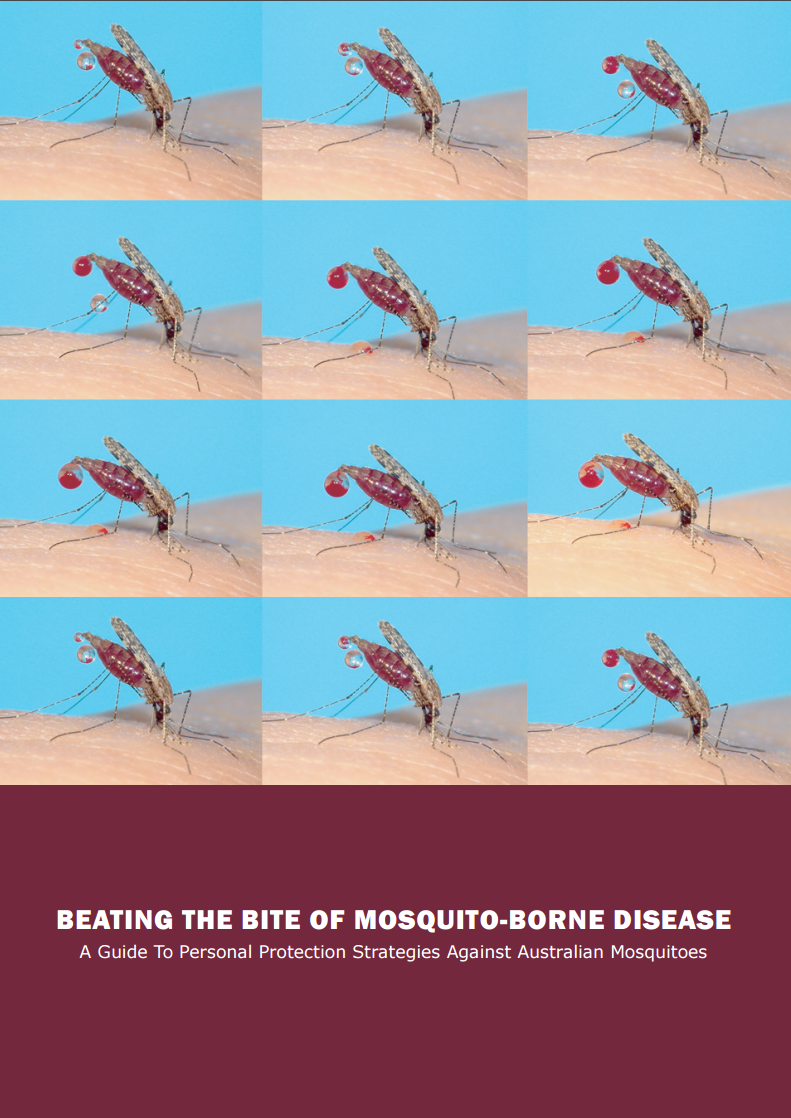
Want to tell someone what to use to avoid mosquito bites, repel mozzies and treat bites? Refer them to this little gem from Dr Cameron Webb (@Mozziebites on Twitter).

You can see it on the website here and download the PDF here.


References...
  1. https://cameronwebb.wordpress.com/mosquito-repellent-guidelines/
  2. http://medent.usyd.edu.au/RepellentGuidelines.pdf