Showing posts with label mosquito. Show all posts

Saturday, 20 August 2016

Tests and temps...

From [10]
It's been about 5 weeks since Brazil updated its microcephaly-related-to-Zika-virus reporting index page. 

The last post listed (a couple of others made their way out via other channels) was from epidemiological week (EW) No. 26. 

For comparison, Colombia is about to post data for EW No. 32. [12]

Interestingly, Colombia's National Institute of Health has not seen any new laboratory confirmed Zika virus disease cases during that same period - so perhaps Brazil is not seeing any either?

Temperature graphs (in Celsius) from 
accuweather.com.
Top-Miami Beach, Florida.
Bottom-Rio de Janeiro, Brazil
Meanwhile, more of the US state of Florida is seeing local Zika virus spread.[4,5,6] If we look at the temperature graphs we can see that Miami Beach (around 32'C)  is certainly a lot warmer and holding more steady than Rio (around 24'C) in August 2916. 

High and fluctuating temperatures are important for flavivirus multiplication in mosquitoes but for the mosquitoes themselves, particularly Aedes aegypti, they can live for about the same period (around 3 weeks) when conditions suit, whether at 26'C or 30'C.[12,13]

As I was recently taught by Rebbeca C Christofferson and Anthony Willson, viral loads do better in mosquitoes living at an optimal temperature. But when more Dengue virus for example, is replicating throughout the mosquito, that can have an effect on the length of their lives, even if not having an immediate impact on mortality.[14]

When you stop and think about it there is a lot going on for a mosquito when it takes a big blood meal. 

There could be a huge rapid weight gain, and there can be a 20'C temperature difference between the host's blood and the insect's temperature - that's a big shock at any size! There is also a big osmotic imbalance (difference in osmotic pressure due to the concentration of dissolved solids in the host's blood versus that in the insect's hemolymph [8,9]) and there's a need to get rid of toxic metabolites.[1] 

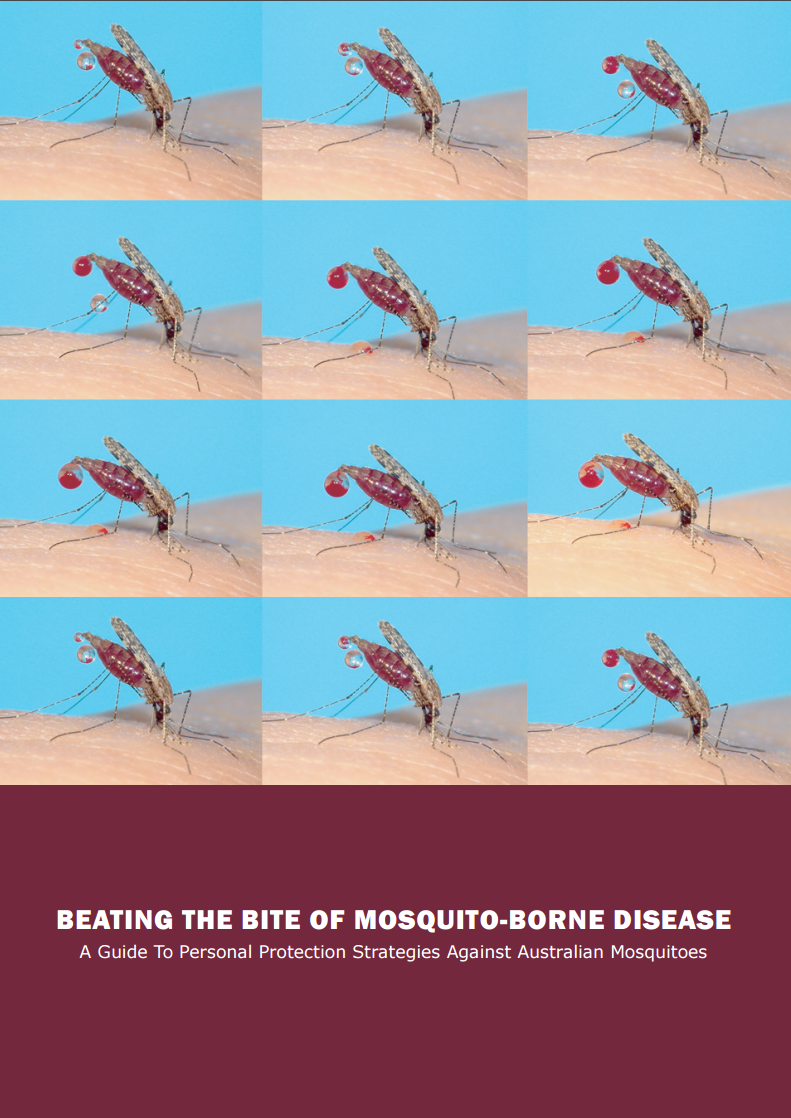
Have you seen that big drop of excreted fluid attached to some species of mosquito's butt? It appears once feeding has started and is something they excrete (urine and concentrated red blood cells; a process called prediuresis) to help them balance osmolarity, offset weight gain and sometimes to regulate their temperature through evaporation.[2,7] 

Some mosquito species retain the drop ('drop-keeping') making use of evaporative cooling, some emit new drops.[7] As far as I can tell so far, Aedes species don't make use of the drop for cooling. Male mosquitoes don't heat up because they don't feed on blood so they rely on environmental temperatures for heating and cooling.[7]

So much more reading to be done (apologies for errors above - I'm still learning about mozzies) - just not of data from Brazil.

References...
  1. Thermal Stress and Thermoregulation During Feeding in Mosquitoes
  2. https://en.wikipedia.org/wiki/Insect_thermoregulation
  3. http://www.vanderbilt.edu/hillyerlab/Research__Circulation.html
  4. http://journals.plos.org/plosntds/article?id=10.1371/journal.pntd.0002190
  5. http://www.ncbi.nlm.nih.gov/pmc/articles/PMC4961054/
  6. http://www.ncbi.nlm.nih.gov/pubmed/18021028
  7. http://www.cell.com/current-biology/pdf/S0960-9822(11)01311-X.pdf
  8. https://en.wikipedia.org/wiki/Hemolymph
  9. https://projects.ncsu.edu/cals/course/ent425/tutorial/circulatory.html
  10. http://portalsaude.saude.gov.br/index.php/o-ministerio/principal/leia-mais-o-ministerio/197-secretaria-svs/20799-microcefalia
  11. http://www.ins.gov.co/boletin-epidemiologico/Boletn%20Epidemiolgico/Forms/public.aspx
  12. http://www.ncbi.nlm.nih.gov/pmc/articles/PMC4961054/pdf/ehi-10-2016-119.pdf
  13. http://journals.plos.org/plosntds/article/asset?id=10.1371%2Fjournal.pntd.0002190.PDF
  14. http://www.ncbi.nlm.nih.gov/pmc/articles/PMC4961054/pdf/ehi-10-2016-119.pdf

Friday, 29 April 2016

Brazil's microcephaly and CNS disorder (M&CD) monitoring: Report No. 23, 2016-Week No. 16...

These graphs are made using data obtained from Week 16's Brazil Ministry of Health microcephaly and foetal and infant microcephaly and central nervous system (CNS) disorders (M&CD) report [1] and media report.[2]

Suspected M&CD cases...

The total number of suspected M&CD cases increased by 78 to 7,228 this week - the smallest rise reported by Brazil to date. This should not be confused with comments in the latest World Health Organization's Zika virus (ZIKV) situation report which states...

 "At this stage, based on the evidence available, WHO does not see an overall decline in the outbreak." 

That statement refers to current data whereas Brazil's M&CD report #23 is describing events that may have occurred approximately 20 to 40 weeks ago.[3] I picked that range because foetal disorders with preceding ZIKV detection have been reported to occur very rapidly, between 17 and 20 weeks in one case study.[4]


The chart above reports the number of newly suspected M&CD diagnoses in Brazil up to 23-April-2016. The cumulative curve (yellow dots; left hand axis) is steady and growing, but slowly steadily. This was the lowest weekly rise (orange bars; right-hand axis) on record.

Confirmed and discarded M&CD diagnoses...

M&CD cases under investigation decreased by 31 to 3,710 this week - the fifth consecutive decrease.


In the graph above, we can see that 79 (blue bars; right hand axis) suspected M&CD diagnoses were discarded upon closer investigation.The rate of these resolved diagnoses (line with blue dots, left-hand axis) is slowing but still seems to be outpacing the rate of confirmed M&CD diagnoses (red dots, left-hand axis). The cumulative number of M&CD diagnoses does continue its climb this week (+30), but this is the smallest addition of new diagnoses on record (red bars; right-hand axis).

The number of these M&CD diagnoses to be confirmed with a ZIKV infection also grows (green dots; left-hand axis) but by just 2 new detections to 194 this week (green bars; right-hand axis). That's the smallest rise on record. Those confirmed ZIKV infections represent 16% of all confirmed diagnoses and 3% of all suspect M&CD cases - but these are not fair comparisons for a range of reasons I won't go on about here.


Why are M&CD diagnoses slowing...?

It's not precisely known why the numbers of M&CD diagnoses are slowing in Brazil. Whatever their cause(s), the trigger(s) for the anomalies occurred in the past - as far as 9 months or as close as perhaps 20 weeks. One suggestion which ties in with the timing of arbovirus epidemics in Brazil, is the weather and its impact on the mosquito breeding cycle. (Thanks Luis F. B. Correia) Mosquitoes are assumed to be the major vector for transmitting ZIKV, wherever in the world it may be. That's a safe bet as far as we know. Undoubtedly, reporting on mosquito detections is not a priority. Only Mexico has reported infected wild-caught mosquitoes to date.[5] There have been more monkeys identified as ZIKV-infected than mosquitoes![5,6] For now at least.


The rainy season begins in the north-east (where M&CD has mostly been diagnosed) in May. Infections are likely to pick up from then - if we crudely add 6-9 months to May 2015 we get to October-2015 - January-2016. 

August saw a rise in microcephaly diagnoses in Pernambuco State in the north-east.[6] 

November is when the Brazil ministry declared a link between M&CD and ZIKV.[7] 

It all kinda fits. 

None of these numbers are precise though because when and where ZIKV was becoming established in Brazil is not known. It is predicted to have been as early as May-December 2013 based on analysis of viral genome sequences to hand,[9] but local transmission was not detected (looked for?) until April/May 2015.[9,10] It may have been there earlier.

Solid data and answers continue to evade trapping. As do ZIKV positive mosquitoes apparently.

References...
  1. http://portalsaude.saude.gov.br/images/pdf/2016/abril/27/COES-Microcefalias---Informe-Epidemiol--gico-23--SE-16-2016--25abril2016-20h07.pdf
  2. http://portalsaude.saude.gov.br/index.php/cidadao/principal/agencia-saude/23386-saude-confirma-1-198-casos-de-microcefalia-no-pais
  3. http://apps.who.int/iris/bitstream/10665/205686/1/WHOsitrep_28Apr2016_eng.pdf?ua=1
  4. http://www.nejm.org/doi/full/10.1056/NEJMoa1601824?query=featured_zika
  5. http://virologydownunder.blogspot.com.au/2016/04/biting-assumptions.html
  6. http://virologydownunder.blogspot.com.au/2016/04/three-monkey-species-and-some-labs.html
  7. http://www.theguardian.com/global-development/2016/jan/25/zika-virus-mosquitoes-countries-affected-pregnant-women-children-microcephaly
  8. http://wwwnc.cdc.gov/eid/article/22/6/16-0062_article
  9. http://portalsaude.saude.gov.br/index.php/cidadao/principal/agencia-saude/23384-saude-divulga-primeiro-balanco-com-casos-de-zika-no-pais
  10. http://science.sciencemag.org/lookup/doi/10.1126/science.aaf5036

Monday, 25 April 2016

Biting assumptions...

This is not Aedes albopictus.
But it is a mosquito.
The Pan American Health Organization (PAHO) and the World Health Organization (WHO) Zika Epidemiological Update (status as of 21 April 2016) had some nice Zika virus (ZIKV) graphs from different - that is, not Brazil and Colombia - ZIKV affected countries.[1] 

It also had a very interesting snippet - that the Mexico Epidemiological Surveillance System (SINAVE) has reported detection of ZIKV in wild caught Aedes albopictus mosquitoes in Mexico.[1] The were identified using real-time RT-PCR and confirmed 1st April 2016.

That's a first for Mexico and also a first for the Americas in terms of detecting the variant of the Asian lineage of ZIKV that has been running rampant across the region, in a presumed vector. To date, all the detection have been from (many) humans, a howler monkey and a marmoset.[1,4,]

The 1966 Malaysian Ae.aegypti
ZIKV isolate is HQ234499 at the top
of the Asian lineage branch
The only (that I know of - please let me know if there are others) other reported detection of ZIKV from wild-caught (not lab infected) Aedes aegypti mosquitoes was a divergent virus in 1966 in Malaysia.[2,3] In that study, culture of infectious virus was also achieved. In Mexico - only ZIKV RNA was detected. It is also possible that the virus sucked up ZIKV from an infected animal or human but that these particular Ae.albopictus might not able to effectively infect other animals or humans. We'd need to know whether the mosquito testing was of whole mosquitoes or mosquito midguts, thoraces, heads, legs, saliva or salivary glands (this being the money part of the mozzie as it shows the virus infected the mosquito, left the midgut and spread, ending up in the part that will produce the infectious spit that is vomited while feeding on the animal). 

Detection in midgut only indicates ingestion whereas finding virus in the legs for example, indicates disseminated infection of the mozzies (ingested, infected, whole body spread). Whole squashed mozzies alone = more work needed. Nonetheless - this is a very valuable finding and its great to see someone is pursuing this and succeeding. And talking about it.

Up until this point we'd been assuming mosquitoes were the major transmitter because they had been in the past - as far as we knew. Now we have a little hard data.

References...

  1. http://www.paho.org/hq/index.php?option=com_content&view=article&id=11599&Itemid=41691&lang=en
  2. ISOLATION OF ZIKA VIRUS FROM AEDES AEGYPTI MOSQUITOES IN MALAYSIA
    http://www.ncbi.nlm.nih.gov/pubmed/4976739
  3. Genetic Characterization of Zika Virus Strains: Geographic Expansion of the Asian Lineage
    http://journals.plos.org/plosntds/article?id=10.1371/journal.pntd.0001477
  4. http://www.paho.org/hq/index.php?option=com_docman&task=doc_view&Itemid=270&gid=34183&lang=en

Tuesday, 19 April 2016

Mosquito repellents and personal protection...

Want to tell someone what to use to avoid mosquito bites, repel mozzies and treat bites? Refer them to this little gem from Dr Cameron Webb (@Mozziebites on Twitter).

You can see it on the website here and download the PDF here.


References...
  1. https://cameronwebb.wordpress.com/mosquito-repellent-guidelines/
  2. http://medent.usyd.edu.au/RepellentGuidelines.pdf

Sunday, 27 March 2016

Zika virus is a testing problem for science...

Edited by Katherine E Arden, Ph.D.
UPDATE #1: 30MAR2016
UPDATE #2: 08APR2016
UPDATE #3: 30MAY2016
I need to get this off my curmudgeonly chest.

I've watched the Zika virus (ZIKV) "event" since January 2016, back when I said this... 

...and wrote a small overview while on holiday.[1]

Since then I've been, on an almost daily basis, alternately and in no particular order disgusted, amazed, shocked, horrified, stunned, disappointed and flabbergasted by the quality, type and amount of detailed information available, about the discussion around that information as it comes out, about the language used and the assumptions underpinning the discussions that have occurred. In short - too many assumptions, too little virus testing data and too many people impatiently rushing to conclude that correlation is the same as causality.


The communication of being sure, or unsure...


There was a confusing comment from the Director General of the World Health Organization, Dr Margaret Chan. Keeping in mind that this is the organization that suggests how to communicate risk to the community in their document Risk communication and community engagement for Zika virus prevention and control: A guidance and resource package for country offices for coordination, planning, key messages and actions.[2]

So we are overwhelmed by non-evidence, despite the evidence not being available yet? How far from actual evidence is that? 

Before this, WHO has been good at saying "looks like something different is happening with ZIKV but we don't know much more yet. In the meantime we're doing things that facilitate reducing the known vector, the mosquito, and bites from them, we're ramping up the testing and the science and we're moving things along on the vaccine front, but we're not putting all our eggs into one basket just yet." 

Why are so many so hell-bent on jumping the gun on ZIKV? 

WHO's science meeting reviewed evidence linking ZIKV infection with foetal malformations and neurological disorders and advised that the implication from the evidence was that the link between microcephaly and ZIKV was looking real. 

Dr Chan said "If this pattern is confirmed beyond Latin America and the Caribbean, the world will face a severe public health crisis" - absolutely true.[22] But this still remains an "IF" for now.

Lab testing and reporting from Brazil needs work...

Among the 6,671 suspected diagnoses of microcephaly in Brazil - the rapid rise for which WHO called a Public Health Emergency of International Concern (PHEIC) - just 122 (1.8%) have any current laboratory evidence identifying that ZIKV infection - past or present - occurred. If there are more laboratory testing data from Brazil to fill this huge gap, they need to be talked about.

Brain injuries...

Microcephaly diagnoses and congenital brain malformations, which are rare diagnoses overall, have been occurring worldwide for a long time.[4] I don't know for how long - perhaps throughout human history? So if the epidemic of ZIKV is actually driving a sudden rise in microcephaly and foetal brain deformity diagnoses, plus meningitis and Guillain-Barre syndrome cases, those diagnoses should be higher in number than what is normal for Brazil. 

Finding a baseline on which to base the official line...

The rate at which microcephaly diagnoses have been reported in Brazil still awaits some type of overall agreement.[13] In the north east, individual reports quote doctors, such as the van der Lindens, who have personal experience in seeing dozens more examples of microcephaly and brain malformations from August 2015 onwards than they had been used to seeing.[11,12,26,27] 

This widely reported evidence is hard to deny despite being anecdotal-the doctors and their collaborators are yet to publish their observations.[25] NB: New paper describing 105 microcephaly diagnoses infants born in Pernambuco State, Brazil  was released after this post, including a van der Linden as author, but has no ZIKV testing.[29] A second study with a van der Linden finds ZIKV IgM in 7/23 microcephaly diagnoses.[30]

In this extrapolation, 2 and 12 are the limits of the 
range of microcephaly diagnoses 
reported by the US CDC.[24]
Publications still appear which use the initial rates of ~150 microcephaly diagnoses in Brazil per annum - about 0.005% of 2.9 million annual live births.[5] This is despite data and others' analyses suggesting that these may not be realistic rates. [6,7,8,9,10,14] 

The reported 'spike' in diagnoses might not be above, or as drastically above, normal figures for Brazil, or certain regions of Brazil, as at first thought. But even this fundamental knowledge remains unclear.

The vector in Brazil is probably something...

No mosquito species in Brazil has yet been identified as a carrier of ZIKV.[3] Testing is being done but no report of a mosquito testing positive for ZIKV have emerged as yet.[3] 

It's not clear whether this extra information would have any impact on the more general mosquito-reduction measures that have been rolled out - spraying, fogging and poisoning. 

However, might this knowledge gap have an impact on some species-specific anti-mosquito measures, such as those involving interfering with mosquito mating or reproduction?

We assume that the Brazil vector is Aedes aegypti because that's what's been the culprit elsewhere and because they can ingest and become infected by ZIKV.[17,18,19,20,21] Other Aedes species also stand accused, as does Culex quinquefasciatus.[23] So this too remains unclear.

Some clarity falls out from between the gaps...

From among all these gaps has recently fallen an article that makes sense.[15] 

No, it didn't support any causal link between ZIKV presence and any sort of brain damage in foetuses. 

It just describes the genetic findings from analysing 7 ZIKV genome sequences from 4 human cases and made a modelled estimate suggesting that ZIKV was in Brazil from May-December 2013. This may sink the canoe hypothesis.[28] 

That date could still change if other sequences are found of course - such as older ones in stored specimens. But it's a nice estimate for now. It may also explain why microcephaly diagnoses were predicted to have been high prior to 2015 according to the Mattos report,[6] if ZIKV is indeed a new and sizeable cause of the burden of  these diagnoses. While this paper tells its story with lots of dense detail - as befits a paper in the journal Science - it takes a little bit of extra time and space to clearly and plainly state what the data do not mean (see the quote above). 

This sort of extra detail is so very important. It shows that the authors have thought through their work and placed it in a bigger picture and it helps those who may be looking to paraphrase the study to see that it has limitations that should be mentioned. 

This really shouldn't be something to praise - it should be the norm - but in many of the Zikaglyphs put into print this year, care has not been taken, too many assumptions have been made and too little thought has gone into the complexities of trying to associate the presence of a pathogen with a disease that is occurring at the same time, or some days, weeks or months later on.

So maybe there is still some hope to be had that science and the media will start talking more frequently and clearly about what we don't know, what we haven't looked for and what other possibilities exist, instead of what we almost know.

"Yes, Zika infection during pregnancy can lead to brain-related birth defects in a fetus".[16]

Or maybe not quite yet.

In summary...

We do not yet have definitive scientific evidence of a causal link between increased microcephaly diagnoses, brain malformations and ZIKV infection.

That is not to say there is no such link, just that we have not yet gathered the evidence to confirm one.

Given the potentially severe consequences of the link being real, it is entirely appropriate that measures are being taken now to reduce exposures to ZIKV by potential parents of either sex.

Until data show otherwise, it remains possible that ZIKV is not to blame and so we need to keep an open mind, keep searching and keep carefully examining strong evidence, because if the cause is not ZIKV alone, or it is ZIKV working alongside some other factor(s), we are missing the boat and failing in our duty to help halt a severe public health crisis.

References...
  1. http://virologydownunder.blogspot.com.au/2016/01/zika-virus-briefly.html
  2. http://www.who.int/csr/resources/publications/zika/community-engagement/en/
  3. http://www.theglobeandmail.com/news/world/who-may-be-leading-brazil-down-wrong-path-on-zika-virus/article29390468/
  4. http://www.ncbi.nlm.nih.gov/pmc/articles/PMC1716566/?page=3
  5. http://adc.bmj.com/content/early/2016/03/14/archdischild-2016-310590
  6. http://www.who.int/bulletin/online_first/16-170639.pdf
  7. http://crofsblogs.typepad.com/h5n1/2016/01/is-microcephaly-surging-in-brazil-or-just-efforts-to-find-it.html
  8. http://northshorejournal.org/microcephaly-and-zika
  9. http://www.nature.com/news/zika-virus-brazil-s-surge-in-small-headed-babies-questioned-by-report-1.19259
  10. http://www.nature.com/news/zika-and-birth-defects-what-we-know-and-what-we-don-t-1.19596
  11. http://www.theguardian.com/global-development/2016/jan/25/zika-virus-mosquitoes-countries-affected-pregnant-women-children-microcephaly
  12. http://www.wsj.com/articles/the-brazilian-doctors-who-sounded-alarm-on-zika-and-microcephaly-1454109620
  13. http://www.thelancet.com/pb/assets/raw/Lancet/pdfs/S0140673616002737.pdf
  14. http://virologydownunder.blogspot.com.au/2016/01/microcephaly-in-brazil-is-it-occurring.html
  15. Zika virus in the Americas: Early epidemiological and genetic findings
    http://science.sciencemag.org/content/early/2016/03/23/science.aaf5036.full
  16. 5 things the world has learned about Zika so far
    http://www.statnews.com/2016/03/25/new-understanding-zika/
  17. http://www.ncbi.nlm.nih.gov/pubmed/26527535
  18. http://journals.plos.org/plosntds/article?id=10.1371/journal.pntd.0001792
  19. http://www.ncbi.nlm.nih.gov/pubmed/25299181
  20. http://journals.plos.org/plosntds/article?id=10.1371/journal.pntd.0004543
  21. http://www.ncbi.nlm.nih.gov/pubmed/26527535
  22. http://www.who.int/emergencies/zika-virus/mediacentre/webcast-22-3-2016/en/
  23. http://www.reuters.com/article/us-health-zika-brazil-idUSKCN0W52AW
  24. http://www.cdc.gov/ncbddd/birthdefects/microcephaly.html
  25. http://time.com/4202262/zika-brazil-doctors-recife-investigation-outbreak/
  26. http://www.nature.com/scitable/blog/scibytes/the_new_ebola_zika
  27. http://www.newsweek.com/2016/03/11/zika-microcephaly-connection-brazil-doctors-431427.html
  28. http://wwwnc.cdc.gov/eid/article/21/10/pdfs/15-0869.pdf
  29. http://wwwnc.cdc.gov/eid/article/22/6/16-0062_article;
  30. http://www.nejm.org/doi/pdf/10.1056/NEJMc1603617
Updates...
  1. Added reference to a van der linden publication [29]
  2. Added a reference to a second Dr van der Linden publication [30]
  3. Repaired typos to Crawford Kilian's name

Wednesday, 6 January 2016

Zika virus, mosquitoes and a monkey on a platform...

UPDATED: 07JAN2016 AEST
As I noted yesterday the first published description of the isolation of Zika virus was from a study set up in the Zika forest in Uganda. It was described in print by Dr George Dick and colleagues in the September 1952 issue of Transactions of the Royal Society of Tropical Medicine and Hygiene.[1]

Rhesus macaque (Macaca mulatta) [2]
In the first study, which began April 1947, six platforms were set up in the forest canopy and upon each, a caged rhesus monkey was placed. 

The first Zika virus was identified from a monkey...

This was to be a Yellow fever virus (YFV) study since Zika forest was known to harbour a lot of previously YFV infected, antibody-positive monkeys-but stuff happens on the road to completing a good plan.

By the way: placing or penning an animal in a location known to, or under suspicion of, harbouring an infectious agent - a virus in this case - is the precess of creating a sentinel animal.

On 18th April, the daily temperature recording for "Rhesus 766" had increased to 39.7'C, rising to 40'C the next day. It was taken to the lab at Entebbe, a blood sample collected and then the primate was observed for the next month. The only sign or symptom of illness in 766 was the fever.

The blood was injected intraperitoneally (no signs of illness) or intracerebrally (became ill from day 10 post-injection) into mice and underneath the skin of Rhesus 771 (which did not develop any signs of illness).

A filterable "agent" (filters were used to remove everything but very small viruses) was recovered from the brains of the ill mice and also from the serum of 766 - it was later named Zika virus (766 strain). The virus's growth could be hampered by antibodies which developed in the serum of 766 a month later, identifying the that the Zika virus was capable of triggering a specific immune response, despite a mild illness. The more lab-savvy of you may have realised by now, that this all happened before cell culture was being used. The only way to "grow" or amplify more virus was to infect anew a susceptible host animal-which could also reveal whether the agent was capable of causing disease, so long as the experiments were suitably controlled.

A second Zika virus was found among mosquitoes...

A second virus (later called strain E/1) was acquired during a different study, but also set up for YFV. The E/1 was identified from a ground up, unfiltered preparation of Aedes africanus mosquitoes in saline which had been caught 11-12th January 1948 using a variation of the platform system. . The preparation was injected intracerebrally into 6 mice and subcutaneously into Rhesus 758 via 9 inoculations, across 2 weeks. 

Diagnosis of Zika virus by infection of animals...

Primate 758 showed no signs of illness, but the mice had - at the 7th day - so at day 8, 9 and 10 after 758's injection, blood was collected and serum injected intracerebrally into groups of 6 new mice. 
  • From the first primate sample (day 8), 2 injected mice died and virus could be passed on to additional mice from filtered preparations of their infected brain tissue
  • From the second sample (day 9), 1 mouse died (and its brain tissue filtrate could also produce new infections in mice). A second mouse was paralysed but another virus, called Theiler's mouse encephalitis virus [TMEV], a picornavirus, was identified upon further infections 
  • No mice died from the 3rd 758 inoculation of serum
  • The serum from 758 was shown to block infection of animals by Zika virus after it was first preincubated with preparations of:
    • the agent isolated from 758 serum after inoculation with the A. africanus preparation or
    • the E/1 Zika virus strain or
    • the 766 Zika virus strain
The authors concluded Zika virus was a new virus and that it triggered a specific antibody response which did not cross-react with YFV, dengue virus or the TMEV found in the paralysed mouse. 

It was also notable that disease was mild or went unnoticed in primates. Primates are usually considered to be close animal substitutes for humans in studies of disease progression. 

No studies of pregnant primates were conducted which does raise the question of whether we should consider a check-list of things to research for each and every virus capable of replicating in us.

References...
  1. Zika virus. I. Isolations and serological specificity.
    DICK GW, KITCHEN SF, HADDOW AJ.
    Trans R Soc Trop Med Hyg. 1952 Sep;46(5):509-20.
    http://www.ncbi.nlm.nih.gov/pubmed/12995440.
  2. https://www.flickr.com/photos/wild_speedy/4185543087/
Updates..
  1. Added some links and worked out some typos and layout issues.